PENS THRILLING WAR
TRIALS, THEN EXPIRES
Thomas J. Moon Stricken When
Writing Autobiography
MR. MOON SHOWS IRON
NERVE AT GETTYSBURG
When Pickett Makes His Great
Charge and Every Member of Bat-
tery A Is Killed Save the Marion
County Man–Rev. J. A. Sutton
Completes the Story.
Thomas J. moon Sr., whose death occurred Wednesday at his home at Meeker, was engaged in writing the history of his life and had been successful in recording the events up until his twenty-eighth year. Failing health compelled him to quit writing, after he had recorded the stirring experiences of the Civil War days.
Reverend J. S. Sutton, of LaRue, then finished Mr. Moon’s life story in obituary form.
Mr. Newman’s partial autobiography in the completion of his life story of the deceased, as written by Rev., Mr. Sutton follows:
Mr. Moon’s Own Story.
“Meeker, Marion County, O., June 23, 1913.
“I Thomas Moon, Sr., was born in Allegheny county, Pennsylvania, on October 24, 1836. My father, Solomon H. Moon, was a Cataraugus county, New York state man, and my mother came from Switzerland with her parents when young. Was married in Allegheny city about 1832. I removed with my parents to Frankfurt, Kentucky, in 1837. My father died there in 1838. My mother, being left a widow with a boy and girl, was remarried in 1840 to Andrew Sharp as good as stepfather has ever lived. He treated my sister and myself well and I can’t say that I always deserve good treats.
“We lived at lock, No. 4, on the Kentucky river, across the river from Frankfort, until 1852, when we removed to Marion, Ohio. The first year we built for miles of railroad, 2 miles east and two miles west of what is now called Longville, on the Bellefontaine & Indiana railroad, which is now called the Big Four.
Moves To Marion.
“Then I moved to Marion in 1853 and built a house on Center street in Kenton avenue. The next year was the cholera, 1854, not much done though. I butchered in Marion until the war broke out. I enlisted in company K, Fourth O. V. I., on April 16, 1861, to serve three months. I was then between twenty-four and twenty-five and was a better man than I have ever been since. We were foolish enough to elect a man, because he had been to Mexico, first lieutenant of the company. We found our mistake later. He got the swell head and made it unpleasant for all of us, so six of us agreed that the first man that could get a fuss out of him had to strike him.
“I, of course, was the unlucky man, and it raised a big fuss in camp. He would not appear against me the next morning, so I was released. He being a commission officer, he resigned.
“I have been on detailed duty a second sergeant to assist the quartermaster in issuing rations and handling meats. Got into a fuss with Captain Brown at Burlin, where we cross the Ohio river and of course, he forced me back to the company.
Reenlisted for Three Years.
“We got our guns on June 6, reenlisted for three years more service and started for Virginia. We left the cars at Clarksburg and took a hike across the mountain to Brecannon, from there to Middle Fork bridge. There we saw the first dead men. We stayed there that night, then on to Richmond, where we had what we thought a big battle, as we saw about 250 dead. We tramped on across the mountains and landed at Beverly the same night. The next day some of the Indiana troops routed some of the rebels at Laurel hill, and headed down toward us. We got 600 of them surrounded that night. Well, that was the first night I ever was on Pickett and I was not scared, but there was something cold kept crawling up my back.
“Well, in the morning we captured the whole bunch, then we went to Webster and took the cars for Paw Paw tunnel. We were then under General Lauder and it was February, 1862. The quartermaster of the division was named Ambrose Thompson, lieutenant commander and United States quartermaster.
Division Forage Master.
“I was detailed along with some others to reload the cars of corn and hay. Thompson asked me if I could issue corn and head to the cavalry and mule trains. I told him I could. I filled out all the requisitions and, at night, when I made my return, he told me he wanted me at headquarter and he would have me detailed as forge master in division
“Next morning he sent me an order, signed by himself and General Lauder, so I acted in that capacity until the next September. I was forge master at Paw Paw Tunnel, Martinsburg and Winchester, and when we started up the valley, I had charge of the headquarters’ train. Well, I acted as wagon master until September, 1862, when we got to Port Royal. General Shields was relieved and the division was broke up and I was sent back to the regiment. Of course, after riding a good horse for seven or eight months, I did not like walking and carrying a gun and knapsack, so I made application for a transfer to battery A, Fourth United States artillery.
A Good Artilleryman.
“I happen to get into the best battery in the United States and will say I made a good artilleryman. Of course, we had more danger, though. I had a good horse to ride a good time generally, but had to obey orders.
This is November 2, 1913, and I have put off writing this as I can neither right nor dictate as I could years ago, though I will do the best I can. I liked the drill and discipline and I like the noise of the big guns. Our battery, as I will call it hereafter, took part in the battle of Fredericksburg, Chancellorsville, Antietam, Mine Run, and all the engagements with the Army of the Potomac, and never got a bad knock out until the battle of Gettysburg.
There we lost forty-four men, and three commissioned officers and sixty-eight horses, when we only had ninety men and ninety horses on the firing line, or what is called the bloody angle of high water mark, on the third day.
Batteries Consolidated.
Of course, we had to watch the enemy, not knowing what move they were going to make next. I battery, first artillery, was knocked out about as bad as ours and so they consolidated the two batteries and all we could man was four guns and what was left of the twelve guns we had in the start. Our guns of battery A are still on the field, where they were left the evening of the third day after the famous charge of General Pickett’s Infantry. I, with the rest, was on that field for five days without much to eat – just laying around our guns, watching the enemy, and not in any shape to attack them, as we were in about as bad a shape as they were. We rode off on that ridge and left our comrades a-laying over that ground, and one of our men left his brother laying there dead. A man that never saw a big battle has no idea of what it looks like to see 50,000 and more horses and more horses laying over the ground for two or three miles and lots of them have been a-laying there for three days and that within fifty miles of Washington, Harrisburg, Philadelphia and Baltimore. There were horses swelled up to bursting and their legs sticking up and telling one that war is hell.
Hardest Time of Life.
“I had the hardest time of my life for the five days on that battle field for a strain on my nerves and from all causes. I am not ashamed of the fact that I was the only man that was not killed that was helping the work No. 4 piece, as that was the first gun the Johnnies run over by General Armstead’s brigade, and Armstead was killed. He fell right at the left wheel of No. 4 piece. I did not think there were rebels enough in the Southern confederacy to run over that line of artillery, though they kept coming until they did run over us. The gun was fully manned when I left her.
“I saw the limber that was not exploded and I went back to hunt more canister, as we were fire and canisters and double shooting the guns. When I left her everybody was on the run, I found no canister and started back to the gun. I looked up and saw Commander Cushing fall, and saw some man catch him in his arms. He was on the right of the gun and he was killed.
General Armstead Killed.
“Just in General Armstead jumped the wall with his hat on the point of this world, and yelling something to his men, though the Johnnies were coming over the wall like a swarm of bees. Armstead can’t hold of the left wheel of the piece and fell right there. I suppose that is where he got his death wound, though I have heard he died in the hospital. Alonzo Cushing was wounded first by a piece of shell through the thighs in the second time he was struck by a small piece of shell in the right shoulder that cut his shoulder about off. I happen to be sergeant of the guard on duty that night. The battery was all scattered and we have nothing to guard except a few dead men and we managed to get off the field, Cushing among the rest. I slept on top of Cushing all night, as it kept me out of the water, it rained all night. The next morning was July 4, 1863. His colored man was called Henry and myself took off his fatigue blouse and put on his dress coat and cut the shoulder straps from the fatigue blouse and kept them and gave the blouse to the colored man. I kept the shoulder straps until the next winter, then gave them to his brother, Howard Cushing, at Brandy station, Virginia, as Howard was with us for a while in winter quarters at Brandy station.
In Twenty-Seven Battles.
“I was through all the battles of the army of the Potomac and there are twenty-seven of them down on the back of my discharge and they gave me an excellent character. That is something that a great many regular army men do not get. Well, we follow the rebel army up with the varied successes to the Potomac river at Williamsburg, when we got ready to attack. But they nearly all got across the river. Then they sent our battery to Washington. They are we got an entire new outfit of guns, horses, harness and sixty new men. By the time we got our men and horses drilled my time was up and I was glad to go home. I shall have to explain by the time we got our men and horses drilled my time was up and I was glad to go home. I shall have to explain how I came to be absent from the guns at Gettysburg, when the rebels ran over us and killed all the men that was there, my chief’s name was Sergeant Murphy. His time would have been up on July 4. He was killed on the second. I being in command of No. 4 piece I was in command.
Falls Among Dead.
“Cushing was in command of the right section, No.2. His guns were dismounted so he and his men drifted down to number 384. Of course, Cushing took the command out of my hands, so I went back about twenty-five yards to hunt more canister, when I looked to the front and saw the rebels coming over the walls, I was between two fires, as our infantry was back of me, I threw up my hands and fell among the dead men and dead horses, I do not believe I have nerve enough to let a brigade of men run over me. One man stepped on my neck, but I stayed still.”
That is as far as Mr. moon got.
Rev. Mr. Sutton’s Obituary.
In the obituary prepared by Rev. Mr. Sutton, after stating the date and place of Mr. Moon’s birth, it is added that the decedent was married to Miss Mary Craner, of Marion, March 30, 1864, and departed this life, December 23, 1914.
“To this union,” says Rev Mr. Sutton, in speaking of the marriage, “was born thirteen children. They are Mrs. W. E. Hatfield, ES moon, of Marion; Mrs. W. L. Mears, of Meeker; Mrs. U. E. Partridge, of Roseville California; J. E. Moon, of Mansfield; Thomas J. Moon Jr., of Marion; G. A. Moon, of San Francisco California; H. L. Moon, deceased, died December 31, 1898, at the age of twenty-one years and four months; Mrs. L. W. Thomas, of Los Angeles; Mrs. G. W. Riley, deceased, died March 19, 1913, at the age of thirty-one years, six months and eleven days; Mrs. C. M. Cookstan, of Meeker; Mrs. Charles spread and Mrs. Charles Lamb, of LaRue.
“Brother moon leaves to mourn his loss a kind and modest wife, two sisters, Mrs. William Godding, of Girard, Kansas, and Mrs. T. A. Thompson, of Marion; eleven children, twenty-seven grandchildren and many relatives and neighbors.
“He joined the Methodist church at Meeker about twenty-five years ago, and had lived a conscientious life. Mr. Moon had the pleasure of living through seventy-eight of the best years the time has ever yet parceled out of to mankind. The onward march of the events had given to him one continuous panorama of his long and splendid voyage.”
His Iron Nerve.
Mr. Sutton then covers much of the same ground covered by Mr. Moon his own life story. After describing Mr. Moon’s experience on the battle field, when he fell among the dead and dying to escape certain death if he had remain standing,
Mr. Sutton adds:
“Such was the iron nerve of this veteran. And when we think how he reenlisted to face the dangers over again in storms of shot and shell, our feeble minds like the words to express his worth. Thus the impress on his memory is not stamped there by pictures, but by realities; not by reading novels and seeing pictures, buy by downright experience, privations and exposure. And when the lull of ambition seemed coming on and a portion of life have been lived up, he settle down in the quiet village of Meeker, in a neat home, with a nice family, and calmly watched his life’s evening horizon purple, when lo; there appeared the fatal malady, with its suffering, and blighted the peace and quiet of age. Knowing he could not live long, he called the family to his bedside, and bid them an affectionate farewell, fully assuring them that he was prepared and, calmly as the day dawns, passed into the silent land.”
Autobiography by Thomas J. Moon
Marion Daily Star dated 12-28-1914


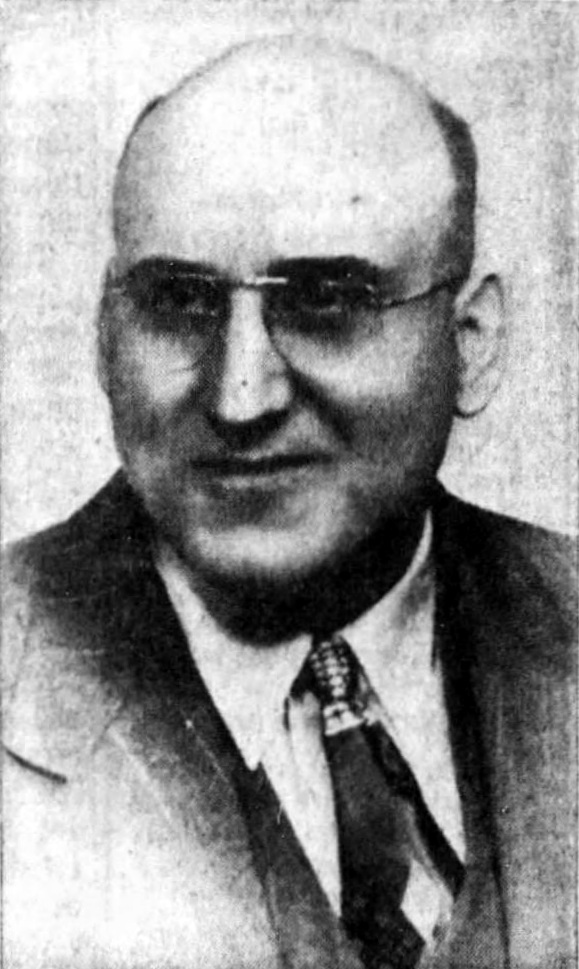
 Honoring Marion Ohio Veterans