Sp4 Richard Lee Sparks Memorial Service

I was invited to attend the Battalion Memorial service for Sp4 Richard Lee Sparks this year on the Sunday prior to Memorial Day. I was invited by Karen Walker-Sparks, the window of Richard L. Sparks. This service is conducted annually on the Sunday prior to Memorial Day at the Marion Cemetery. The memorial service is conducted graveside by the 589th Engineers Battalion Association.

Others attending were Ron Goodwin, representing the 589th Engineers Battalion Association; Bob Coy, veteran of B company, 589th Engineers; Paul Mitchell, 101st veteran; Oakly Sparks, Jr., 1st. Cav. veteran; and Diane Walker-Butler, sister of Karen Walker-Sparks; and Brad, grandson of Karen Walker-Sparks; and Nikki, granddaughter of Diane Walker-Butler.

Ron Goodwin, who is a veteran of A company, 589th Engineer Battalion, was there to read the tribute and memorial address for Richard Sparks on behalf of the 589th Engineer Battalion Association. Goodwin stated in his address that he and the association wanted the friends and family to know that Richard L. Sparks has not been forgotten by those who served with him in Vietnam. He also stated that it was with great honor that he placed the flowers on Richard L. Sparks’s grave to show their respects for his service and sacrifice.

SparksR (1)

Bob Coy, of Delaware, Ohio, was attending to honor Richard. He also served with the 589th and was a member of B Company in Vietnam. Paul Mitchell and Oakley Sparks, Jr., are cousins to Richard Sparks and were also serving in Vietnam. Oakley had stated that, “There were five of us cousins serving in Vietnam at the same time.” He said that some of the cousins found out where he was and paid him a visit, much to his surprise.

At past Battalion Memorial services a group of veteran bikers came from Ohio and Kentucky to pay their respects, including Richard’s nephew. Karen Walker-Sparks expressed how touched she was by this honor they showed for her dear Richard. She expressed how much she still misses Richard and appreciates those who come to attend and honor him.

sparks2Earlier in Sparks’s military career, he was assigned to the 82nd Airborne Division (the All-American Division). He participated with Operation Power Pack, in which the All-American Division intervened in the civil war in the Dominican Republic. He was also assigned to a couple of missile bases in northern Ohio.

Richard-L-Sparks-1963-Harding-High-School-Marion-OHSp4 Richard Sparks was born on 10 May 1945, in Marion, Ohio. Sparks attended and graduated from Harding High School class of 1963. He served with the 589th Engineers Battalion, D Company. He died on 9 September 1968, in the Binh Dinh Province of South Vietnam. Sparks left behind his wife Karen Walker-Sparks, and then ten month old daughter, Rhonda Sparks.

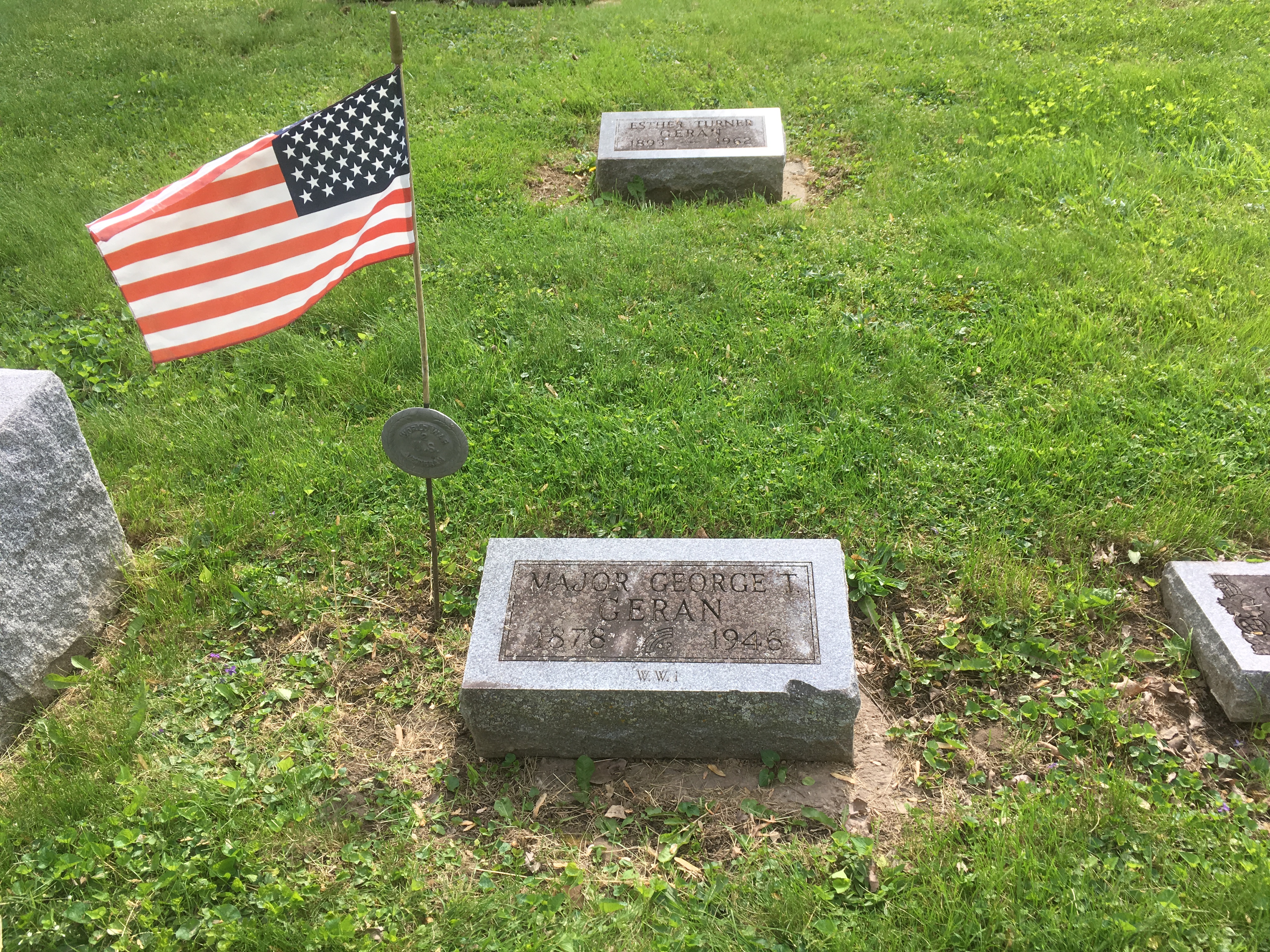
Sparks is buried in the Marion Cemetery in the Woods section, lot 87. Sp4 Richard L. Sparks is remembered on the Honor Roll, at Marion Veterans Memorial Park; on the west side of the Marion County Courthouse; and also honored on the Vietnam Wall Memorial Panel 43W, line 43.

Sp4 Richard Sparks is also remembered on the Vietnam Veterans Memorial at the Marion County Admin building at 222 West Center St. in Marion, Ohio.
William Schurch – Vietnam Veteran, Retired Platoon Chief, Marion Fire Dept.

William Schurch was born in Marion, Ohio, and graduated from Elgin High School in 1966. While at Elgin High school, Schurch played on the baseball team and was a manager for the basketball team. After being drafted and failing the physical due to a hernia, Schurch began working at Tecumseh Products Company. In that time he had to have his hernia repaired and was called back to take a draft physical. Having a private pilots license Schurch sought to become a pilot. He was given orders to attend helicopter training after completing basic training. He traveled to basic training at Fort Polk, Louisiana, with another Marion recruit, Michael Louck.

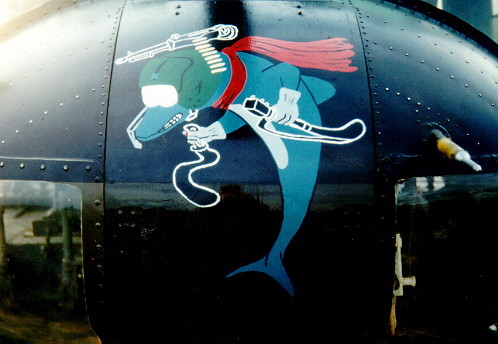
Schurch was in the United States Army from January 1969 until February 1971. His main job was as a helicopter pilot. He flew UH-1 Helicopters with the 174th Assault Helicopter Company and at time provided support for the 756 Medical. His call sign was Dolphin 20.Dolphin

While in Vietnam Schurch said he was able to stay in contact with his family via letters. He spent his down time playing cards and enjoying bar-b-ques. He remembers when another Marion resident was assigned to his unit. He said Dan Schifflit was assigned to his unit for training. Schifflet later sent to another unit to fly helicopters.

Schurch remembers action that earned him the Bronze Star Medal. He recalls a helicopter from his unit had been shot down in an open area near a river. The area had a wooded tree line around it and the downed pilot was reporting that he was taking fire from the tree line. Schurch was the lead helicopters of a formation of three. He took the center and had the other ships fire rockets into the tree line as they came in to the hot landing zone. they were able to quickly remove the other crew.

Schurch also received the Vietnamese Cross of Gallantry for recovering a Vietnamese Scout patrol who were in danger of flood waters. During a monsoon the patrol of 8-10 men were stranded on a dike in waste deep waters. He assembled a volunteer crew, since the visibility was poor due to the heavy rains. With visibility so poor due to the rains, Schurch had to at first be guided out by the base radar. He was only able to fly about 10 feet off the ground. As he approached the patrol, they could not see each other, but the patrol could hear his helicopter. As Schurch flew around the patrol they guided him via radio, until he was able to locate them. Schurch then was unable to land so he hovered as the patrol loaded. He then had to return being again directed by the base radar.

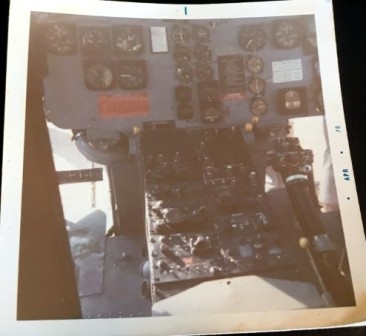
SchurchHueySeat (2)
UH-1 from pilot seat

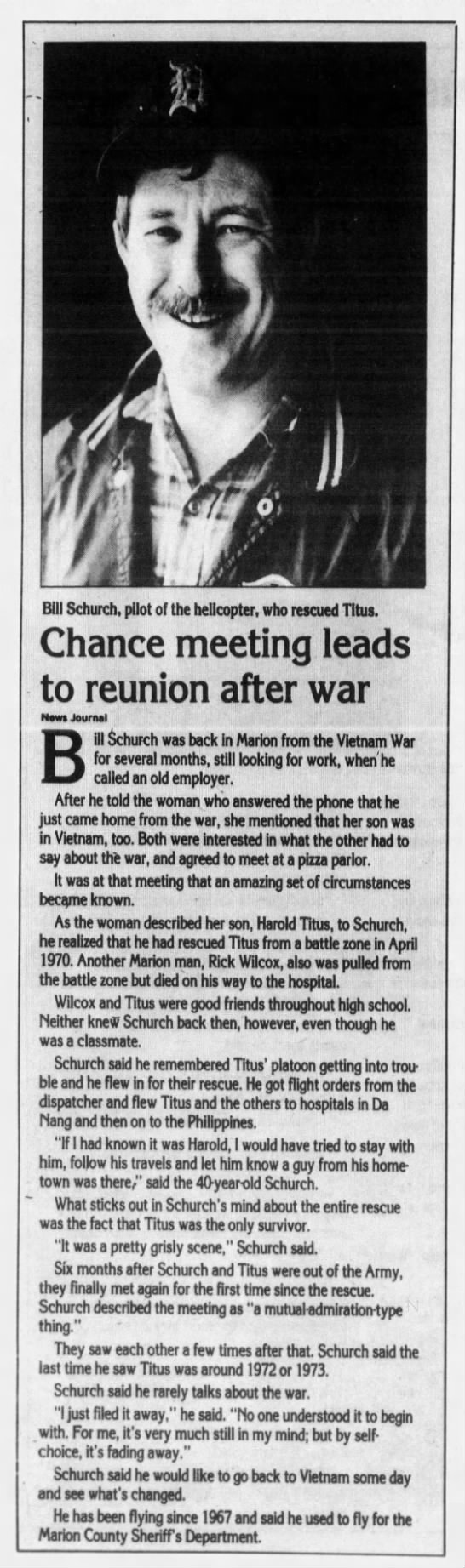
After returning home to Marion, Ohio, Schurch had learned that while flying a medevac mission in Vietnam he had extracted two local men. The men were Harold Titus and the other man he wishes not to share the name of, out of respect for the family.

One of the missions that Schurch remembers was a Christmas mission in which his Executive Officer (XO), had asked for a volunteer crew. The XO had gotten his hands on some Jim Beam and wanted to deliver Christmas meals to the grunts in the field. Disconnni the XO dressed up as Santa Clause and they flew to the outposts and brought meals and a bottle of Jim Beam for the men to have. As they approached an outpost, Santa would lean out onto the skids of the helicopter and wave at the troops. He gave the commanding officers the whiskey under the conditions that each man got a shot if he wanted.

Schurch said they always made it a priority to get mail out to the men at the outposts. They felt that it was very important to keep the soldiers in touch with the outside during such stressful times.

Schurch was discharged with the rank of Chief Warrant Officer 2. He said he regrets that he did not keep in touch with those he served with.

SchurchVietnam (1)
L-R Unknown, Captain Pistroni, Schurch, Dennis Casey and co-pilot Donald Mills.
Screenshot (28)
From the Marion Star December 15, 1973

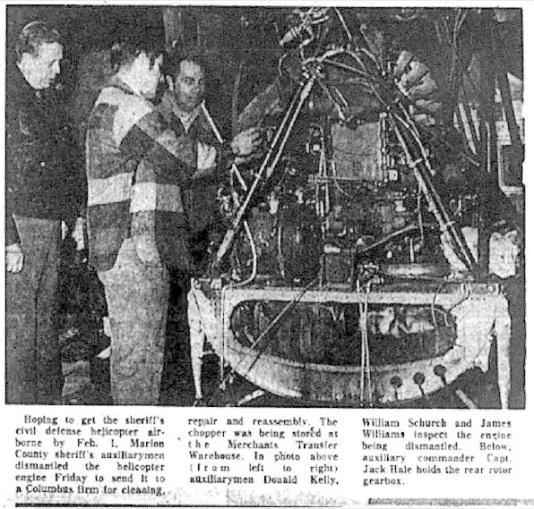
After he returned to Marion, Ohio, Schurch returned to Tecumseh Products Company, until he secured a job at the Marion Fire Department in 1974. While Schurch proudly served his hometown, he worked his way through the ranks earning the position of Platoon Chief and running his own crew, until his retirement in 2001. Schurch also was an Auxillary Sheriff and the first helicopter pilot for the Marion County Sheriff’s Department. He helped to get the Sheriff’s first helicopter in running condition. He flew for the Sheriff for 18 years.

Related article from the Mansfield News Journal May 7, 1989

SchurchTitus

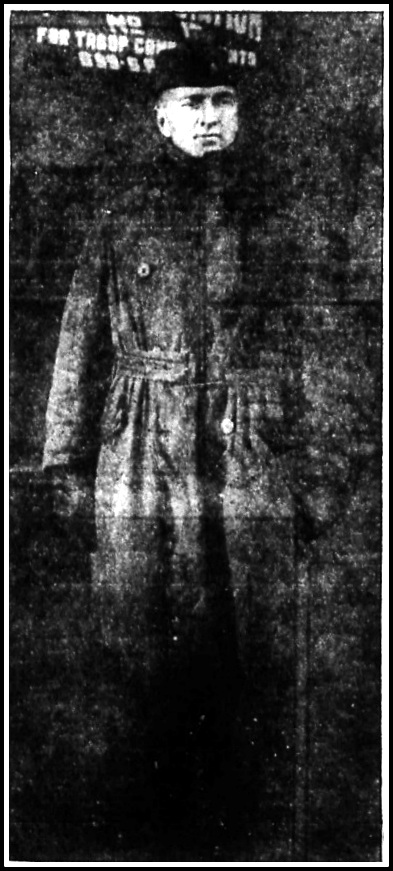
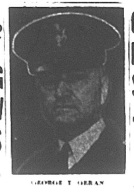
Major George T. Geran

George T. Geran came to Marion, Ohio, in early 1903, having been raised in Warren County, Ohio. He attended a three-year course of study at the National University of Lebanon. He then attended the University of Michigan before coming to Marion, Ohio and entering law practice with former classmate, James H. Eymon. He continued to practice law in Marion until 1919, when he was first elected City Solicitor. He later was appointed City Solicitor in 1927 and then was re-elected. He was considered to be one of the city’s best authorities in municipal law, due to his experience as City Solicitor.

The Bar Association also held George T. Geran in high regard. They stated that no member of this bar performed his professional duties with greater sincerity and candor. It went on to say that Geran stated his position openly and frankly and that neither client nor adversary could induce him to advocate a cause or to seek an end that he did not believe to be fair and honorable. He is said to not have deceived himself as to the proper course nor knowingly do or say anything to deceive another. The courthouse was closed during his funeral so that all in the legal profession in the county may attend his services.

GeranGeorge T. Geran began his military service in 1908, when he enlisted in D Company Marion, Ohio. He enlisted in the recruiting office, then located in the basement of the courthouse. Geran was found to be diligent in mastering the manual of arms. A year after joining D Company, Captain E. O. Richardson, Commanding Officer, selected Geran as one of the Corporals. After a year as corporal he was promoted to sergeant. In 1910 he was promoted to 2nd Lieutenant. In 1916, after twos as a Lieutenant, he was promoted to Captain and Commanding Officer of D Company.
George T. Geran served as a Captain of D Company (Marion, Ohio), 166th Ohio Infantry. He organized and led them on the Border Campaign with Mexico. While on the border the company was chosen as the “Star Company” of the Fourth regiment, but it was also picked as one of the best companies on the border both as to tactics and conduct. This was now doubt due to the leadership of Captain Geran and his professionalism. Shortly after returning to Marion, D Company was again called to organize for Federal Service and serve in Europe for the Great War (WWI). The accolades of his command are too numerous to list here. He was promoted to Major while serving in Europe.

George T. Geran was highly regarded by his subordinates in the military. On 4 July 1919, after returning to Marion, Major George T. Geran was unanimously elected the first President of the newly formed Marion County Association of World War Veterans. He was not only elected unanimously but was unopposed and received a “loud applause” from those in attendance at the Marion County Fairgrounds. It was here that this organization was formed.

GeragGTmarker (1)Colonel Hubert L. Taylor who served under Geran as a private in the Border Campaign and during the Great War said, “In my 24 1/2 years of service I can say of all the commanding officers I have had, he was the finest.” He recalled that Geran continued his friendships with the boys after the war. Colonel Taylor, who also served in World War Two presented the Colors to Mrs. Geran at the funeral after they were removed from the casket and folded.

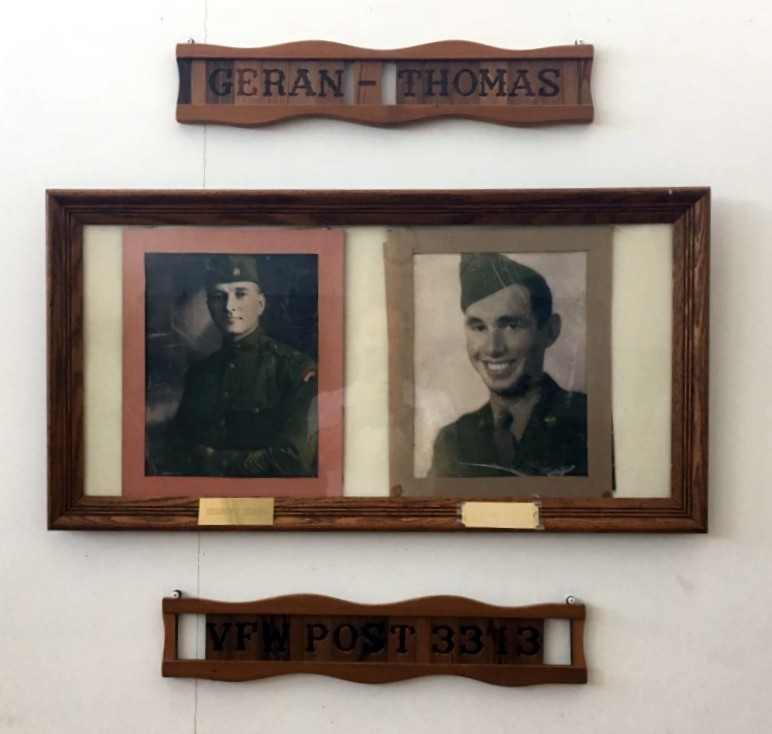
GT03George T. Geran was a member of the Dyer J. Bird Marion Chapter, Rainbow Division, he was a past president of the Ohio Rainbow Veterans Association, past commander of the Bird-McGinnis Post no. 162, American Legion, Geran – Thomas Post 3313 of the Veterans of Foreign Wars, which is now co-named in his honor, and the Marion Voiture No. 48, 40 et Eight.  He was one of the founders of the American Legion, as he was in Paris during the organization and was a signer of its charter.

George T. Geran was born on October 29, 1882 in Warren County, Ohio to Mr. and Mrs. Theodore F. Geran. He had a sister, Mrs. C.W. Johnson of Petaluma, California. George Geran was married to Esther Mack on October 16, 1922. To them was born Daniel Boone Geran. He also had a son, Robert S. Geran, from a former marriage. His son, Daniel Boone Geran, also of Marion, Ohio, went on to attend the United States Military Academy, West Point, New York, and later retired a Brigadier General in the United States Air Force.
Daniel Boone Geran’s son, George Geran, followed in the footsteps of his grandfather, George T. Geran, becoming an attorney.

Books:
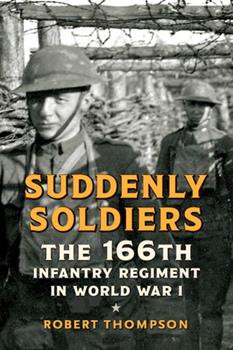
Mentioned in Suddenly Soldiers by Robert Thompson
pages 6, 124-125, 158
D Company is mention on several pages.

July Fourth Celebration 1919

July Fourth Celebration 1919

From the Marion Daily Star July 5, 1919

THOUSANDS AT VICTORY
CELEBRATION IN MARION

Estimated Over 20,000 Visit the
Fairgrounds.

BIG FIGHT RETURNS ARE
READ BY J. AUSTIN REED

Winners of Various Events – Fire-
works at Night – A Won-
derful Day.

Marion’s “Victory Fourth” and homecoming celebration for the soldiers, sailors, and marines of Marion county, which was held at the fairgrounds Friday, attracted the largest crowd of people that has ever assembled on the grounds on a single day. While it was given by the people in general, much of the credit is due to the members of the various committees who devoted much time to the success of the entertainment.

While the temperature was the kind to keep fans and handkerchiefs in almost constant use in some places, those who sought shade of the grandstand or under trees received the benefit of a stirring air which made them comfortable. Many enjoyed picnic dinners at the grounds and long before the time scheduled for the opening of the afternoon program the large grandstand was filled and the grounds were crowded with spectators and automobiles.

Over 20,000 There.
Estimates of some more conservative placed the crowd during the afternoon at over 12,000, while the crowd in the evening was much larger. Many took their lunches for the evening, while those who journeyed home or down street for the evening meal returned to witness the program in the evening.

In all, it is figured that more than 20,000 people visited the grounds during the day. The refreshment stands did a big business until the close of the entertainment. During the afternoon and evening Dowler’s band rendering a pleasing program and there was not a dull moment for the visitors.

Mayor A.J. Sautter and J.A. Williams, secretary of the chamber of commerce, looked to securing the contestants for the various events, while J. Austin Reed presided in the stand as starter and announcer during the afternoon and evening. During the afternoon he read the returns of the Willard-Dempsey fight, at Toledo.

First Race on Program.
The first race on the program was a motorcycle race with three entries, Carl Ferguson, on an Indian, was required to go eleven miles to ten miles for his opponents. John Woodcock, on a Harley-Davidson, and Floyd Stiffler, on an Excelsior. Ferguson won in fourteen minutes and seven seconds for eleven miles, while Woodcock made nine and one-half miles, and Stiffler seven and one-half miles.

In the ten-mile automobile race, three machines were entered, LeRoy Cramer, with a Dodge, won the race in fifteen minutes and thirty-seven seconds, taking it easy toward the last. E. McEldowney, with a Studebaker, made fifteen laps, while Cramer made twenty. White & Irey, with a Buick, had a blow-out after the first lap and had to retire.
The motorcycle bi-car race was an exciting event between Fred Maag, on a Harley-Davidson, and Glenn Dane, on and Indian, these two racing side by side for most of the five miles and Maag winning by about 100 feet. Tony Kennell, on and Indian, was third, and Rolla Johnson, on an Indian was fourth. Maag’s time was eight minutes.

Boy’s Bicycle Race.
The boy’s bicycle race furnished quite a little amusement, there being seven entries. Harper was an easy winner in three minutes and twenty-seven seconds. Weston was second, Foos was third and Gerow was fourth.

With the race program concluded the canvas was stretched on the track for the boxing bouts which followed. The first bout between McGuire and Nichols was scheduled for six rounds, but just before the gong in the third round the referee stopped the bout, because Nichols was bleeding badly from a cut lip.

The bout between Young Reynolds and Jack Conway was a fast ten-round mill which furnished a lot of entertainment and was undoubtedly a better go than the championship battle in Toledo. Referee Feidner declared the match a draw, both boxers fresh and fast in the final round.

The lunch hour in the evening was followed by a vaudeville act donated by the New Orpheum management. This was followed by an exhibition by Fire departments Nos. 1 and 2. Headed by the car of Chief TJ. McFarland, the engines and aerial ladder of the departments made a run around the track and connected four lines of hose to each engine in the short space of one minute and forty-two seconds.

Following this exhibition the firemen gave a demonstration with the pulmotor and administering aid with the “First Aid” kit. Then came a demonstration of the operation of various nozzles, the raising of ladders and the operation of the aerial ladder which was shot in the air to a height of over sixty feet after which the firemen followed each other to the top. The firemen then lined up in front of the wagon and expressed their thanks for the attention of the crowd and received a good applause.

A Beautiful Sight.
The grounds in the evening presented a beautiful sight, the main mammoth crowd filling the grandstand and enclosure of the race track and other parts of the grounds.
Sparklers thrown in trees, hurled through the air in the hands of old and young, together with red fire, kept the grounds and sky in one continuous flare.

As soon as it was sufficiently dark, the most gorgeous pyrotechnical display ever witnessed in the city was enjoyed. This was in charge of experts and all kinds of displays were witnessed in the air, while various designs of a beautiful nature were displayed on the large racks erected for the purpose.

This display lasted until 10:30 o’clock and held most of the crowd to the finish.

Michael Louck

Michael Louck attended Harding High School and graduated with the Class of 1964. Louck played football and ran track while attending Harding and was friends with many who served in Vietnam. Before joining the Army, Louck remembers his very good friend , Mike Spicer, being killed in Vietnam. Knowing he would soon be drafted Louck enlisted in the United States Army. Louck traveled to Fort Polk, Louisiana with another Marion man, William Schurch.

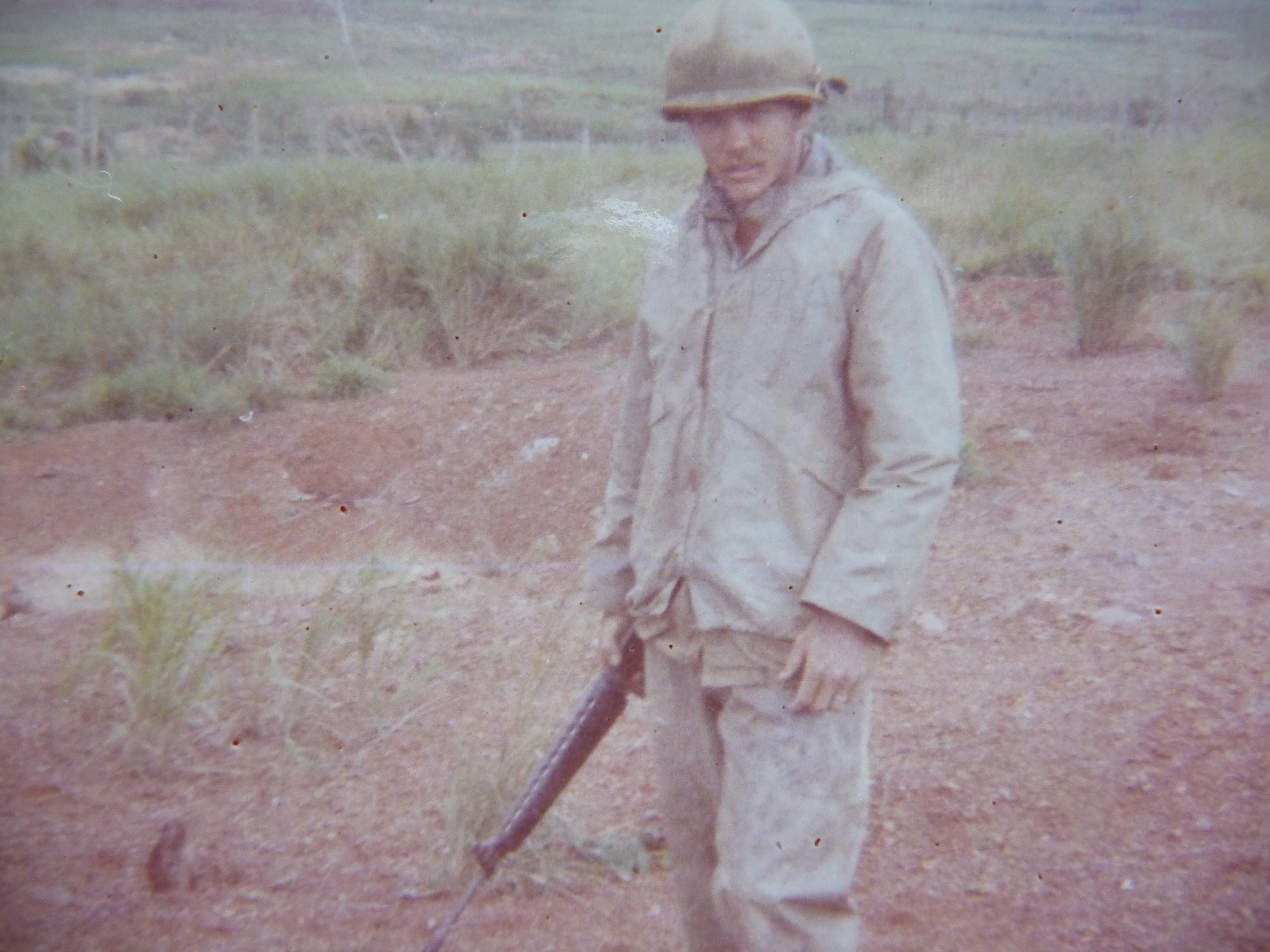
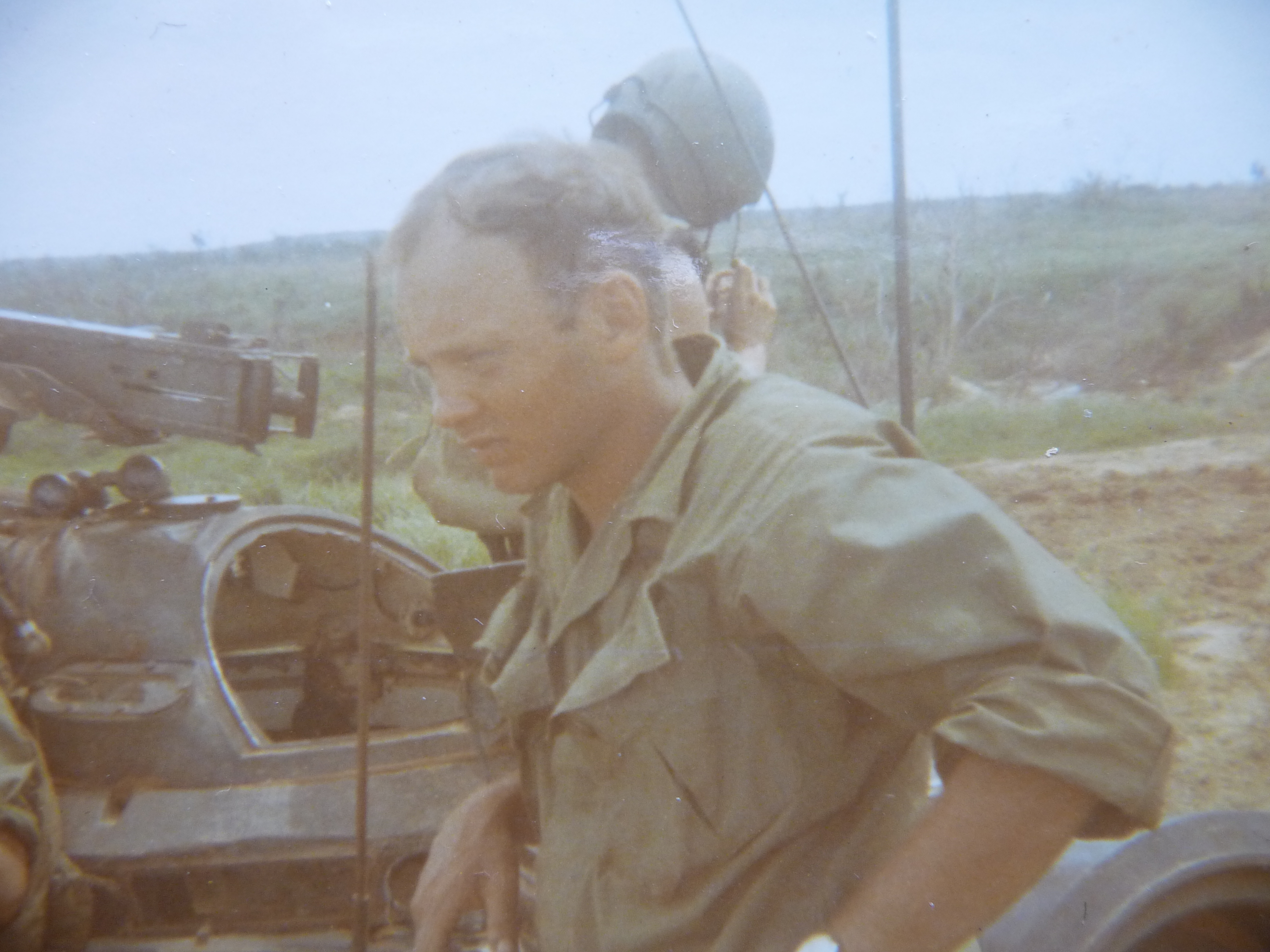
Louckvietnam (3)
Louck dismounted

Louck received his training for 11E-20, Armor at FT. Knox, KY. He served in Vietnam from August 1969 to August 1970 as a gunner/tank commander. When the company commander was with him, Louck was his gunner. Louck was assigned to B Company, 1st Battalion, 77th Armored which was assigned to the 5th Infantry Division. They supported units such as the 1st Battalion, 61st Infantry Regiment (Mechanized) and the 1st Battalion of the 11th Infantry Regiment. His unit would be on patrol for 30-45 days then return for 5 days for a maintenance stand down. He recalls not having much down time, but when they did they would have Bar-B-Q’s and write letters home.

Louckvietnam (2)Louck earned the rank of Sergeant and was awarded the Bronze Star Medal, ARCOM and Vietnam Campaign Medal among others. He said he is most proud of the time he was able to pull his badly wounded tank driver out of the tank and get him safely out of harms way after they were ambushed by the North Vietnamese Army (NVA). One other event that he will never forget was on 2 October 1969. At 0200 hours his unit came under a heavy NVA ground assault and was eventually overrun. Spooky came on station at about 0330 hours and supported them with mini gun fire and illumination. After daybreak, Spooky departed and the Navy jets came in and dropped napalm along with high explosive bombs. Louck said during the fight he really thought he would not see the next day. After the fight, two soldiers from his unit were killed and eleven dead NVA soldiers were found inside his perimeter. Forty years after returning from Viet Nam he made contact with the driver he pulled from the tank and they remained good friends up to the time his driver passed away. He also made contact and continues stay in touch with his Company Commander, Captain John Moore.
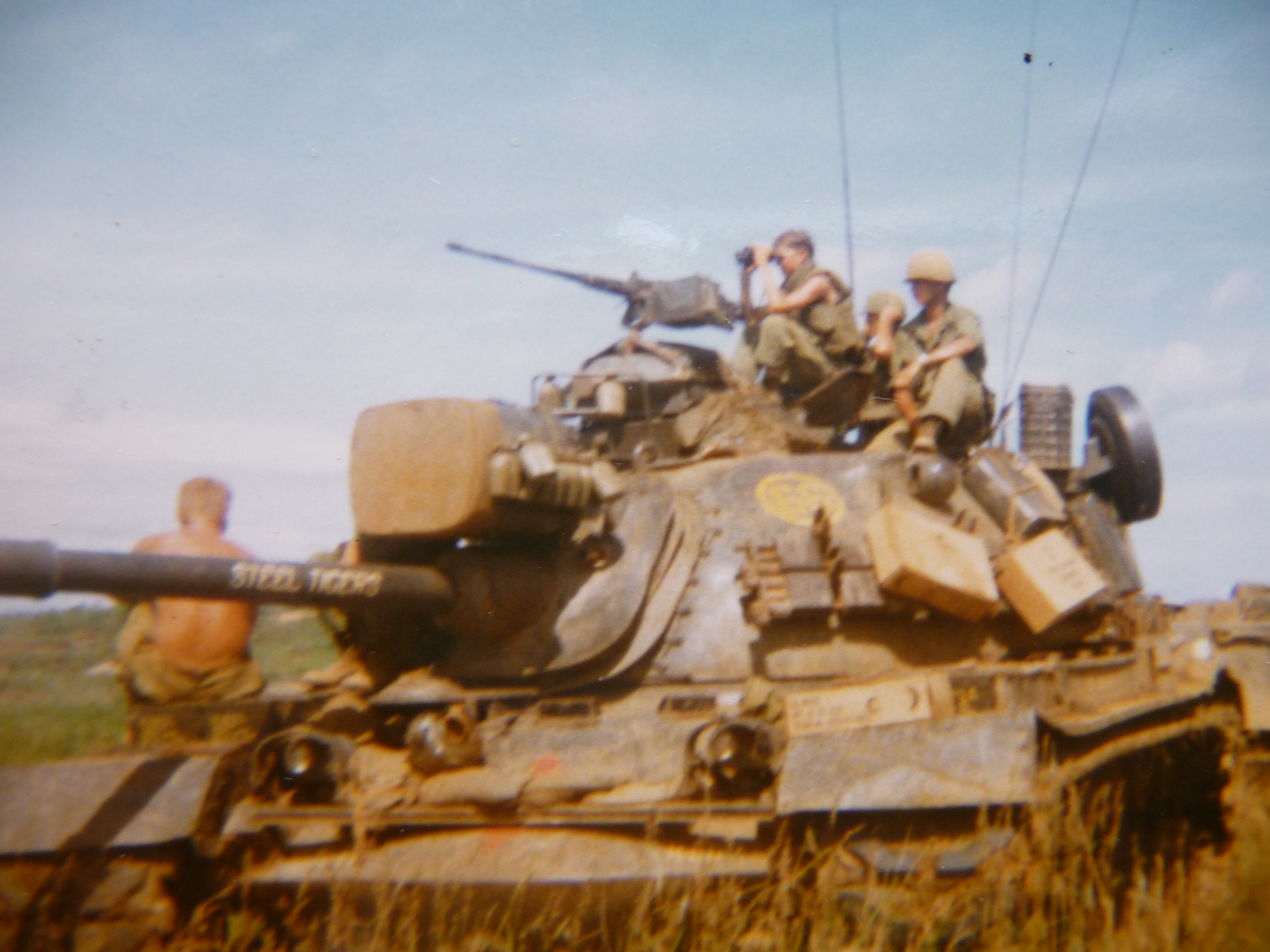
Louckvietnam (1)Louck also remembers a time in late August when his tank’s brakes locked up. He and his loader had to unlock them. While he and the tank loader were getting the required tools, he felt an impact on his face and at the same time he noticed the loaders face turned red. He was not sure what was occurring as a mortar had impacted about 10 feet away, yet he did not hear the impact of the mortar. He said that made him remember the saying, “You never hear the one that gets you.”

After leaving the Army in 1970, Louck spent some time in the Air Force Reserves. He later spent a career doing contract administration work for the government. He was privileged to work on projects such as; B1-Bomber and Space Shuttle while in Columbus, Ohio, F-16 while in Texas, F-18 while in Finland, F-15 while in Saudi Arabia and Air Force-1 while in Wichita. He now resides in Sevierville, TN.