Physical Requirements for World War One Draft

6-6-1917
Marion Board of Elections officials compiling the figures for conscription report 3,675 men between ages of twenty-one and thirty. Of the number registered 100 were reported as colored, 106 were aliens and seven were from enemy countries. Interpreters and police had to be called in to assist in the registration process. Many of the foreigners thought that they were signing to go to war immediately and would not sign until is was understood through the interpreters that they were only registering. One Mexican was from Agosta and a telephone call was used with an interpreter to answer questions. Beside the Mexicans there were Italians and many other nationalities.


6-7-1917
The Marion Daily Star reported : “No longer need the little fellow, or “runt,” as he is sometimes called…”
The local recruiter for the regular army has received orders for him to enlist men of five feet in height. Men below five feet four inches in height will not be accepted in the United States Army. Men below five feet four inches, but at least five feet in height may enlist in the British army and the Canadian Expeditionary forces. Men that are below five feet, will be enlisted in the service of the allies. This is ironic when compared to the average height of the Nisei soldier of World War Two in the 442nd Regimental Combat Team (RCT). The average Japanese-American soldier in the 442nd RCT was five feet three inches tall and weighed 125lbs. The 442nd RCT is the most decorated unit in history.


9-27-1917
In September of 1917 the officers at Camp Sherman reported of the type of men the draft boards were sending to Camp Sherman. In the 330th Regiment (Cleveland, Ohio area) there was found to be eighty-seven Austrians, eighteen Hungarians and thirteen Germans. Some of these men do not speak English. One man was discovered to have six brothers and thirty-two cousins in the German army.

Many claim they did not know they were signing exemption waivers, but thought they were applying for an exemption. One of the foreigners, at Camp Sherman, who thought he had applied for exemption tried to kill himself by cutting his own throat. When this failed to end his life he later tried to drown himself in the Scioto river near camp. This also failed as fellow soldiers rescued him from the waters.
Officers have also reported that a man has arrived with a wooden leg and another with only one eye.

The War Department had assured that the draft would be run by civilians so as not to have the military place military standards on the draftees prior to them being examined. It appears much needed to be learned on both sides.

D Company in Combat WWI, France

This article specifically covers D Companies experience in combat. The previous article covered the actions of the Rainbow Division and 166th Infantry (the former Ohio 4th Infantry O.N.G.). D company was part of those experiences as they were in the 1st Battalion of the 166th Infantry. The following are accounts of D company through letters home and news articles from the Marion Daily Star.

D Company and the Rainbow Division get first taste of death in combat. Although they had been seeing their comrades succumbing to death by disease, the first combat death came with great ceremony and sadness. Private First Class Dyer J. Bird of Broadway, Ohio who enlisted with D Company on 16 July 1917, was the first soldier killed in combat from the Rainbow Division. He was killed on 1 March 1918 in the St. Clement sector.

When D Company gets its taste of combat, Captain Geran seems pleased with their conduct. He alludes to the fact that men have been killed in combat, but does not give any soldiers names. We also learn that Geran is now an acting Major. He also describes life in a French village and his preference to life in the U.S.A.

From The Marion Daily Star dated 4-8-1918

SOME MARION SOLDIERS
ARE SHOT BY GERMANS

Captain George T. Geran Writes
of Recent Battle.

MARION MEN “GET” SIX
GERMANS FOR EACH LOSS

Captain Geran Is Now Acting Major
Gives Praise To His Men for Steadfastness.

S.R. Reber, of Mt. Vernon avenue, has received letter from Major George T. Geran, who left here as a Captain of D company, and presumably, from references in previous letters from him since he has been in France, is now acting major, in which he writes:
“We just come from quite an extended trick in the trenches, and you have no time to do anything up there except lambast the Huns – and if I do say it, we left our mark on them. The boys were as steady as anyone could ask, and we had a bad job one night. They have got some of us, but we have been paying them back, I think about in a ratio of six to one. It is not so bad up there as the papers made out. We are having our rest period now, preparatory to going in again.
WORK ON SMALL SCALE.
“We have had quite a sever winter, not so cold as you have had, but lots of raw, disagreeable weather and lots of snow, and we had to be out in it practically all of the time.
“This is a funny country, Everything is done on such a small scale. You should see them farm. They use the methods of a hundred years ago – you will see a cow and one or two horses hitched tandem to their wagon and plows. Their threshing is done with little hand or horse power machines. One of our big machines will thresh as much grain in a day as they could in a month. Eight or ten acres is a good-sized farm. But there is no waste. Everything is saved we could learn a good lesson from them in that.
“They have lots of stone and have fine roads. The have road building down to a science. There are no farm houses, but the farmers all live in villages and go out to their farms, located around the towns. Consequently they have small towns all over the country, only a mile or two apart. They take very good care of their forests. Every time they cut a tree they plant one in its place.
French Living Conditions.
“Lumber is very scarce. Their houses are all in one building and are all made of stone or concrete with tile roofs. Family and stock live in adjoining rooms. They are a dirty people so far as their persons ans streets are concerned, but the women are good housekeepers and their living quarters are very clean.
“They have community pasture fields, all the stock from one village being under the care of a shepherd and pastured in one place. Each village has its wooden shoe maker, its harness maker, its distillery, its storekeeper, priest, schoolmaster, and no one else is allowed in the same business in that town. The only thing they allow competition in is saloons, Anyone can run a saloon. In fact every household makes its own wine and sells it to anyone they please.
“France is all right to visit but not to live in. I’ll sure be a booster for America if I ever get back. There is no place like the good old U.S.A. and Ohio is the cream of it all.”


From The Marion Daily Star dated 4-19-1918

Claude Boxwell Writes of Life on
Battle Line

Green Camp, O., April 19 –
The following was taken from a letter received from Claude Boxwell, dated March 11, 1918 and received on Saturday: “I have just come out of the trenches for the second time since my arrival in France and begin to consider myself quite a veteran. I am enjoying the best of health and am having the time of my life. We are getting all the good substantial grub we want and our sleeping quarters are good and warm, and if our mail should come a little more regularly we wouldn’t have the shadow of a ???? coming, as we soldiers would rather have a letter than an unexpected pay day.” Mr. Boxwell is with company D., 166th United States Infantry.

Rev. and Mrs. A.L. Vandegriff received a card from their son Roy Saturday, telling of his safe arrival in France.

Claude Boxwell’s name is on the WWI Honor Roll at the Veterans Memorial Park.


From The Marion Daily Star dated 5-4-1918

CLEMY MOORE LIKES
SOLDIERING OVER THERE
Has Been in the Trenches, He
Writes Sister.

Mrs. Pearl Tanner, of John street, has received the following letter from her brother, Clemy Moore, now on France.
“We have been in the trenches and come out all right. They surely are some nice place to be, no chance getting lonesome. There is plenty of noise and they make you think of home. I enjoy myself anyway. I suppose you folks ate lots of eggs Easter. I did not get any. I was walking all day in the rain. We are in a haymow, I am sitting on my bed with my mess pan on my lap writing. I have written letter every week. Will close hoping to hear from every on soon.


From The Marion Daily Star dated 5-12-1918

CORPORAL M.B. ROUSH
BACK FROM TRENCHES

Writes to Parents Here Telling
About Experience.

Corporal M.B. Roush, with D company, 166th infantry, in France, write to his father and mother. Mr. and Mrs. J.E. Dickison, of Davids street, saying:
“We are now having some rainy weather for a couple of days, and it looks as though it had just commenced. We. have completed another trip to the trenches and we are now cleaning up for a move to another place, ‘Somewhere in France.’ We had some very good weather this time. Our patrols were again masters of No Man’s Land, being several times up close to the German trench that we could hear them talking.
“A couple of small fights took place. We had two gas attacks, but had no loss. They tried to raid us, but failed, as our fire was too severe for them.
“Yes, I could use tobacco for a pipe. We can get tobacco, but it is cigarettes and is not much good for a pipe, which is what I use.”

Mathias B. Roush’s name is on the WWI Honor Roll at the Veterans Memorial Park.

Rainbow Battle Movements

It was reported in the Marion Daily Star on 31 January 1918, Rainbow Boys In First Clash With Huns. This article reported that the Germans had raided the American trenches and that the Americans bravely met the charge. It was also mentioned that no casualty reports were yet available. At this time no regular casualty reports were being released. These reports later became more regular and contained names and hometowns of those killed, died of wounds, wounded, and seriously wounded.

From 21 February 1918 to 23 March 1918 the 166th Infantry was in the Luneville sector, Lorraine, France. the 166th was one of the first American units to enter combat. They served in the Vosges mountains of this sector.

Dyer Bird’s funeral was held March 3, 1918. His headstone lists his date of death as March 1, 1918

On March 12, 1918 the first American forces to attack the German lines were fifty Ohioans, members of the former Fourth Ohio National Guard and now the 166th Infantry of the 42nd Infantry Division (Rainbow Division). They are under the command of Colonel Benson Hough. The men traversed with the French in the American sector in Lorraine. At midnight two forces moved 600 yards under cover of artillery. When the men reached the trenches the artillery stopped and the men dropped into the German trenches. They found the Germans had fled. They then moved forward another 600 yards to the German lines, again under cover of artillery. Two wounded Germans were taken prisoner and much valuable material and documents was captured. A third raid found that the Germans had also fled and the positions were destroyed.

From 31 March 1918 to 21 June 1918 the 166th Infantry served in the Baccarat Sector, Lorraine, France.

May 11, 1918 the Marion Daily Star reports Old Ohio Fourth in Heavy Action. The news deduced this from the number of names of Ohio men on the casualty list. They also knew some of the men left with the 166th Infantry.

June 22, 1918 Citation for Rainbow Boys

Division wins Distinction on the Lorraine Front
Between 4 to 14 July 1918, the 166th served in Esperance-Soulain Sector.
Between 15 to 17 July 1918, the 166th served in the Champagne-Marne Defensive. Here the 166th was online with the regiment between Verdun and Rhiems. The Germans were expected to make an attack in force to break through to Paris. The attempt was made by the Germans, but stopped by the Americans and allies. The 166th, of which D company was part, fought alongside the D’ Alpine chasseurs. This was a special picked unit of French soldiers.

From here the German’s lead by the Crown Prince tried from July 14th to July 18th made attempts to break through to Paris, but were stopped and turned. These troops were Fourth Prussian Guards, a select detachment of the Kaiser’s. This turned the allies defensive strategy to offensive in nature.

Between 25 July to 3 August 1918, the 166th Infantry fought in the Aisne-Marne Offensive. Here the Rainbow Division relieved the 26th Division where it remained in almost continuous combat until 4 August 1918.

It was here in the Chateau-Thiery while trying to make a crossing at the Arque River that the men of D Company may have had there most painful and damaging action. As they crossed the Orque River they 250 men were killed or wounded from the German defense. They started out with 400 men and only 150 men reached the objective, thus winning the battle. The 166th spent eight days out of the battle zone to rest and replenish troops with replacements.

Between 12 to 16 September 1918, the 166th Infantry fought in the St. Mihiel Offensive.

Between 17 to 30 September, the 166th Infantry was in the Essey and Pannes Sector in Woevre, France.

From 12 to 31 October, the 166th Infantry fought in the Meuse-Argonne Offensive.
Between 5 to 10 November, the 166th Infantry fought again in the Meuse-Argonne Offensive.

The 166th Infantry was in front of Sedan when the Armistice was signed.

166th was part of the Army of Occupation in Germany for six month before returning home.

Pfc. Dyer J. Bird, First Rainbow Division Soldier Killed in Action

Dyer J. Bird (some sources have Melvin as a middle name) was born 4 January 1900, in Broadway, Union County, Ohio. His parents are Edwin C. & Mary A. (Predmore) Bird. Dyer was raised in Broadway, Ohio and came to Marion, Ohio, joining D Company, Ohio National Guard.

Dyer J. Bird may have been employed in Marion at the time of his enlistment. Private First Class Dyer J. Bird of Broadway, Ohio who enlisted with D Company on 15 July 1917. Dyer Bird was listed as a Marion, Ohio resident at the time of his enlistment.

Private First Class Dyer J. Bird was the first soldier killed in combat from the Rainbow Division. He was also distinguished as the first Union County resident killed in the First World War, as well as the first D Company soldier killed in combat action. He was killed on 1 March 1918, in the St. Clement sector. While at a listening post a German raiding party approached him. He threw two grenades, as he turned to sound the alarm he was shot. As went down he was heard to say, “The Germans are coming in the form of a wedge. Boys, I’m dying.”

His funeral was held on March 3, 1918 and his body was buried in a cemetery on a hill behind the village of Domjevin. Chaplain Lt. J. J. Halliday read the last rights and “Taps” was played to bowed heads.

birdfuneral-e1553453403453.jpg
From the book Rainbow Memories by First Lieutenant Alison Reppy

Private Dyer J Bird was promoted to Private First Class 31 Aug 1917, and later was to posthumously receive the Croix De Guerre by the French government.

BirdCroix
From the Marion Daily Star date 27 April 1918

The following was from findagrave.com
Family records show that his middle name was Melvin.
Raised by his grandparents. Father: Edwin, (I had Edward) C. Bird – born Sep 1865 in Ohio.
—————————————
1st Union County, Ohio soldier to die in WW1
Serial Number: 93405 Race: W Residence: 913 Chaney Ave., Marion, O. Enlistment Division: National Guard Enlistment Location: Marion, O. Enlistment Date: 15 Jul 1917 Birth Place: Broadway, O. Assigns Comment: Co D 4 Infantry ONG 15 July 1917 to 13 Aug 1917; Co D 166 Infantry 1 March 1918. Private 15 July 1917; Private, first class 31 Aug 1917. Defensive Sector. American Expeditionary Forces 18 Oct 1917 to 1 March 1918. Killed in Action 1 March 1918. Notified M A Predmore, uncle, Richwood, O. Awarded or Award French Croix de Guerre with silver star.

Dyer J. Bird is remembered on the several monuments; memorial markers at Chaple Heights Memory Gardens, Marion, Ohio; Broadway Cemetery, Union County, Ohio; near his father’s grave in
Milford Center Cemetery, Union County, Ohio.

Dyer J. Bird is remembered on the Honor Roll, at Marion Veterans Memorial Park and the World War One Honor Roll, located on the second floor of the Marion County Courthouse. There is also a memorial marker honoring him at Chapel Heights Memory Gardens, Marion, Ohio (the marker is located at the base of the flagpole in Block O), and in front of the main sign, at the front of the Broadway Cemetery, Broadway, Ohio.

Books:
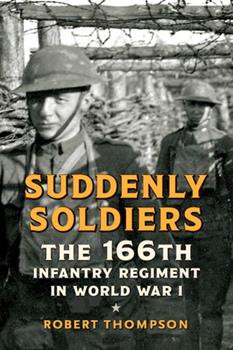
Suddenly Soldiers by Robert Thompson
Pages 56-58, 63-64

The Rainbow Division Moves to Europe

From Camp Mills, D Company, 166th Infantry, along with the rest of the Rainbow Division made their way across the Atlantic Ocean in troop transports. The 1st and 2nd Battalions, and Headquarters sailed on the transports USS Henry R. Mallory and USS Pastores. They arrived in France at the end of October 1917 and were on French soil in November. The regiment was joined on November 19th.

ussmallory

usspastores


This trip was not without it’s dangers. They had to travel in convoys for protection form German u-boats that had been sinking ships since many of these men were serving on the Mexican Border. They had all read about the attacks of u-boats and now had to helplessly ride out the danger at sea. U-boats were not the only danger in the convoys, as we see from a letter of a soldier taking a similar trip the following year.

From The Marion Daily Star dated 5-3-1918

MARION BOY DESCRIBES
RAMMING OF TRANSPORTS
Edward M. Taylor Writes from
Jersey City Hospital.
HOW IT FEELS WHEN
BOATS COLLIDE AT SEA
Taylor Says He Knows Now
What Terror Is – Captain
Laughs.

Details of the ramming of two transports at sea while en route to Europe with soldiers are related in a letter written by Edward M. Taylor to his mother Mrs. M.R Taylor, of No. 531 north States street. The transports collided Wednesday evening April 24.
The letter is written from Jersey City Isolation hospital, where Taylor was taken after his arrival at an Atlantic port. It says in part:
“We embarked on a converted German liner and left in a convoy of seven transports and one cruiser. The conditions were pretty dad in the hole with no ventilation t speak of an no lights at all. Wednesday evening, April 24, about 10:30 o’clock in the evening, I was on deck talking when the danger signal went up from one of the vessels on the extreme right. It was running wild and had turned in toward the convoy, then the big boat on ur immediate right cut in towards us. We kept straight ahead, but that boat deliberately turned and rammed us.
HOW TAYLOR FEELS.
“I have never known what terror was until I stood there petrified and saw that boat hit. I recovered myself and ran below for my life belt. I expected a panic, but I am certainly proud of the American soldiers. Most of them had been knocked out of their bunks, by the shock and thought it was a torpedo, but they were just as calm as at drill
“I happened to be among the first to get to my station after the signal to stations and the captain picked me to help the sailors lowered the boat. He was joking and laughing. It wasn’t so laughable for me because I was drenched to the skin with the salt spray. I had also fallen over the body of a dead man lying on the deck.
HOLE IS PATCHED.
“Luckily the boys did not have to take to the boats, as the hole on the side of the vessel was patched up. Both ships, one with the hole in her prow, came back to the United States.”
Taylor says in the letter that he believes that he is threatened with diphtheria. He enlisted in June in the field artillery and was sent to Douglas, Arizona, where he received preliminary training. In the examinations of the men he ranked highest and was selected to be sent abroad with a number of other soldiers to study modern warfare. He has been recommended for a commission in the field artillery.

  The 166th Infantry began a march on December 12th, in which they marched with full gear for three days. By mid-February 1918 they had entered the trenches for the first time on the Le Lorraine line. When D Company arrived in France they began writing home describing the sites and culture of France. The also expressed their desire for mail from home and even requesting a sundry of items to be sent over to them.


From The Marion Daily Star dated 12-3-1917

SOLDIER FINDS FRANCE
IS A STRANGE LAND
Letter Comes from E.C. Case to
Miss Mary Peeling.
Miss Mary Peeling, no 374 north Prospect street, has received a letter from Edward C. Case, who in “Somewhere in France”. The letter was dated November 3 and in it the young man states he is well and happy, but has not received any mail since he landed. He says the country is beautiful and that it was not cold there then. He also says things are strange and different there than in the United States.


From The Marion Daily Star dated 12-13-1917

GREEN CAMP MAN SEES
PRETTY GIRLS IN PARIS
Says Paris Must Be Place Where
Women Originated.
CLAUDE N. BOXWELL
WRITES HOME FOLKS
Tells Guardedly of Experiences
in France – Says American
Soldiers Are Enthusiastic.
“Soldiering in France is much different than in the United States, for everybody seems to be on his nettle, trying to learn everything possible about this mode of warfare,” says Claude N. Boxwell, who is with D company, 166th infantry, somewhere in France, in a letter written November 6 to his parents, Mr. and Mrs. R.E. Boxwell, of Green Camp.
“Our grub is very good considering the circumstances and no one seems to kick about it. Everybody seems happy and don’t seem to care whether school keeps or not. I am in the very best of health. In fact, I never felt better n my life. I weigh about eight pounds more than I weighed when we were called out.
“France and its people are very interesting. I would like to write a long letter about this country but haven’t much time and must hurry or I will be late for mess and that is one formation a soldier can’t very well miss and feel happy afterward.
“I hope to be back home within a year, that is, if they will only turn us loose and leave us mop up the earth with ‘Kaiser Bill.’ The boys can hardly wait until we get a chance at him and when we do, all there will be left of that regime will be a part of the box it came in.”
Trip to New York
In a letter mailed November 24 from Paris, the young man tells his parents about his trip to that city He says:
I arrived in Paris at 6 ‘clock this morning and am pretty tired. I had a very interesting journey thus far. I was granted twelve hours leave to go sight-seeing in Paris and I surely have been going some for I have been from one end of the city to the other and find it to be very interesting and very like New York.
“I have been from one side of France to the other, three ways, since I have been in this country and like it very much, but there is no place like the old U.S.A. for me.
“I am going to send some pictures of myself just as soon as I get a pay day, which I hope will be soon. Don’t forget to write for I haven’t heard from home for over a month and a letter would be very welcome. And please don’t forget to send me that tobacco. There isn’t any duty on it if you mark it “Soldier’s Mail” when you send it.
Pretty Girls in Paris.
“I leave Paris some time tonight for somewhere, but my old address will be all right as letters addressed that way will reach me wherever I happen to be in France.
“I never saw so many pretty girls in my life. Paris must be the place where women originated.”
In an earlier letter, written just after his arrival in France, Mr. Boxwell speaks about the beauty and picturesqueness of France and of its interesting people. He said he enjoyed the voyage across and was one of the few who did not suffer from seasickness.
In all his letters the soldier inquires after his friends and the people of Green Camp, especially the “kids” and in one letter he say, “have all the kids write to me and I will try and answer.” He also speaks about rigid censorship and of the letters returned to the soldiers by the censors, which makes it hard for the boys to write, and they can not express themselves as freely as they would like.

(Claude Boxwell is listed on the Honor Roll at Marion Veterans Park)

  While in France the soldiers continued to train and practice movement as larger units. They also were strengthened physically and mentally. In this letter we see the pride in training and conditioning exhibited by soldiers of D Company. We also learn of the weather and general conditions they lived under.

From The Marion Daily Star dated 2-13-1918

INTERESTING PICTURES
OF CAMPS “OVER THERE”
Fred Norton, of Morral, Rainbow
Soldier, Writes
SCHEDULED FIVE-DAY
HIKE MADE IN FOUR
“We Broke the Record.” Norton
Says – Writes Mother and
His Brother.
Letters recently received from Fred Norton of Morral, who is in France with the Rainbow division by his mother, Mrs. S.P. Norton and his brother, Lewis Norton, of Morral gives interesting pictures of the life of an American soldier training in France in a letter written January ? he says
I am well and getting along fine. Our squad is on ??? detail today.
We have just finished a long hike. We do a lot of moving since coming here, so I do not get to write as often as I would like to. The last word from you came a few days before Christmas, and was surely welcome. I wish you could get two bottles of ink in the traveler cases and refill them with spirits of camphor and mail those with a dozen razor blades. Our mail comes very irregularly and far between times.

Second Letter
The next letter written to his mother told of a hike they had taken.
“We have been having very cold weather lately. This is Saturday January 5. One week ago we were just finishing a five hike in four days. We broke the record. One morning during the hike the temperature dropped to twenty degrees below zero. We had heavy snow and lots of hills to contend with, but we came through in good shape. Only one man fell out the lst day and six during the other three days out of our Third battalion. Many comical things happen along with our roughing it. The morning that was so cold during the hike we had thawed bread, coffee, bacon and gravy.
“One of our boys carried his mess a little distance to his billet and his gravy froze before he got there.
The boys hobnail shoes would freeze stiff and hey would hammer them on the floor or take a stick of stove wood and hammer them to soften them.
Both Had Mumps
Ottow Barth came back yesterday from the hospital. Fred Shenk has not come back yet, but we look for him any time now. Both of them had the mumps.
“The box you sent to Hempstead by express failed to come in time for me to receive it before crossing the water. And just before Christmas I received a notice from the express company that they were holding at my risk a box. We don’t get our mail regularly. We got a portion of our Christmas mail and then started on the hike. We all likely get some soon though. The last word from you was dated November 24, which makes forty-two days and no other word yet.
We are on the move so much of the time since coming here. Wish we were on our way home via Berlin and would drop in upon you at supper time some evening. This is a beautiful country, but away behind the States in many ways. It is too rough a country – up hill and down.

The Third Letter
The last letter received was written January 1? to Lewis Norton
“This is Sunday and raining.” he wrote,, ” I am getting along nicely with my rifle since I have had a chance to use it.
“We get all kinds of rumors here, but little real news. We are billeted at present in a small town with a church, school, cafe and cheese factory. We can buy cheese, apples, bread, milk, English walnuts, almonds, eggs, chocolate candy, jellies and other spreads. In the evenings when we all sit around and open fire place, we take bread we saved during the day and toast it before the fire. Then we have hot milk and toast.
“We get out all kinds of weather for firewood and to take hikes. We drill nearly every day. I belong to the scouting and sniping squad. We have a good bunch of shooters and scouts. Since we have been called out we have had to do map drawing and sketching also scouting and night patrol work. One must be a good soldier you know and a good marksman.
“We have had no Y.M.C.A. since coming to France nor church services either. We have Y.M.C.A. papers a part of the time.”