January 23rd brought news that the Fourth Ohio would begin returning home to Ohio. One regiment will depart each day until all 10,000 soldiers are moved from Camp Pershing. The Fourth and Fifth infantry and a cavalry squadron will move directly to Columbus Ohio for demobilization. General Frederick Funston has not yet set the date for departure, but the Fourth Ohio will be first to leave.
Another accidental shooting death was also reported with the news of the return. Harry L. Baker from Marietta and member of the Columbus company was accidentally killed. A Corporal D. O. Rizer of B company was temporarily held, as Baker was borrowing Rizer’s rifle when he was killed.
Recent articles stated that Pershing’s troops would be moving north toward the United States border and Carranza troops would take their place.
From the Marion Daily Star dated 1-22-1917
A FOURTH OHIO BOY IS KILLED
Discharges His Weapon Into Own Breast
HARRY L. BAKER IS VICTIM OF ACCIDENT
Fails to Remove Cartridge from His Rifle.
El Paso, Jan. 22 –The Fourth Ohio Infantry lost another man Sunday evening in one of the most remarkable accidents on record.
Private Harry L. Baker, member of a Columbus company, but a resident of Marietta, shot himself through the breast with his own rifle as he stood at attention while the strains of the “Star Spangled Banner” died away.
Baker had been on guard and, according to Fourth officers, neglected to unload hos rifle when he was relieved. A few moments later Baker lined up with his company for “retreat.”
He stood at attention with his mates, as the band played the national anthem, and the Stars and Stripes were furled for the night.
The first sergeant ordered “inspection arms,” the “order arms.” As Baker lowered his rifle to “order,” the gun went off, the charge penetrating his breast.
The body probably will be shipped to his uncle, Luther Farley, in Marietta, this afternoon. Baker was an orphan.
On Page two of the January 22nd edition of the Marion Daily Star
RETURN OF D COMPANY BOYS SOON IS ASSURED
Plans Already Under Way To Welcome Them.
PUBLIC RECEPTION MAY BE HELD AT THE ARMORY
Civic Organizations and Other Bodies Will Take Part in Giv- ing Them Big Send-Off.
As was announced in the Star
some weeks ago the boys of D company, Fourth Ohio Infantry, will be returned to their homes in this city within a short time. Orders to the effect were received by the boys on the Mexican border today and preparation are being made for their entertainment.
Immediately upon learning that the boys would be home within a short time, Josiah Bindley, president of the chamber of commerce called a meeting of the board of directors of the chamber to be held within the next few days so that a suitable demonstration can be given the boys on their return, as was announced in Saturday’s Star. Major T. E. Andrews, commander of the local post of the Spanish-American War veterans will take an active part in the reception of the boys.
It is expected that a public reception for the boys will be held at the armory shortly after their return to the city. It is also expected that all of the civic and other organizations will take part in the reception. CITY’S WELCOME
An effort will be made to have Mayor A. J. Sautler sanction a city-wide demonstration when the boys return.
It was at first announced that the boys would be sent to Camp Perry to be mustered out of the federal service, but it is now probable that they will be mustered out in Columbus, which is the regimental headquarters.
The Marion boys will be only a small percentage of the guardsmen to be returned to their homes immediately. It was said in a telegraphic dispatch that 24,243 men are affected by the orders issued today.
The boys will have no need to worry over employment on their return, as it was stated by Mr. Bindley this morning that if the jobs which the boys held when they were called to the colors are not open when they return efforts will be made to find other jobs for them. Many of the boys who left have been having their salaries paid in part by the corporations by which they were employed when they left.
February 16, 1917
As news was reported that the Fourth Ohio was the first to march to trains and are now heading north through Texas. News was also reported of Villistas making camp near the border and even some murders occurring on the American side of the border. Also it is reported that Officers of the Fourth Ohio have blank transportation orders in hand in case of an emergency. The officers were to stay in contact with the War Department. As the guardsmen and citizens were planning mustering out of federal service, there was preparations for possible return to the border if hostilities required or possible coastal service.
From History of Marion County, Pg. 456 Leggett, Conaway, & Co., Chicago, 1883
Jack Cade, Civil War Veteran
One of the most successful scouts in the ranks of the Federal army in
Western Virginia, in the summer of 1861, was John (Jack) Cade, of Marion County, a private in Company K, of the Fourth Ohio Volunteer Infantry. Soon after the regiment arrived in that section, he began to develop qualities which attracted the attention first of Col. Andrews, his regimental commander, and finally of McClellan himself. The latter, then issued orders that “Jack” should be allowed to pass through the Federal lines, day or night, whenever he wished. He used the privilege to good advantage, several times saving the Union troops from disastrous surprises. As a successful scout did he become so annoying and so well known to the rebels, that Col. Ashby, rebel, offered $500 for his scalp. Jack, being anxious to see the man who was so anxious to get hold of his top knot, started out toward Petersburg, then held by the rebels, arriving at the house of a Union farmer by which Ashby was expected soon to pass. He borrowed a suit of clothes, a horse and a scythe, from the farmer and started up the road to meet said Ashby. The latter came in sight, and Jack, with the scythe swung over his shoulder, stopped him and had a protracted conversation with him. Several times during the interview, Jack was tempted to shoot Ashby with his revolver, but he suffered him to depart in peace.
Jack learned, during the conversation, that two companies of Ashby’ s cavalry would soon pass along a certain road, and he collected a party of Union’ farmers, ambushed them and killed eleven men and two horses.
When the Fourth Regiment was transferred to Shield’s division, and the division transferred to Banks’ department, Jack went with it, of course. He soon won the confidence of his new departmental commander, and was again employed in collecting information of the movements of the enemy. The last time he was sent out by Gen. Banks, he was accompanied by Richard Field, also of Marion, and as brave as Jack himself. They were ordered to procure information of the situation of Gen. Ewell’s camp. They proceeded to a point on the Masanatten Mountain, whence they could, by the aid of a splendid field-glass belonging to Col. Godman (also of Marion), obtain a full view of the rebel encampment. After making a thorough sketch of it, they started for headquarters, Jack having his papers in his cap, with his hand-kerchief over them. On their way, they were suddenly surrounded by a number of Mississippi soldiers. The officer in command ordered them to surrender, which they did; but when ordered to advance, Jack stopped, took off his cap, took out the handkerchief, gathering the papers in his hand with it, wiped his face, threw the handkerchief back, deftly retaining the papers in his hand, and, whilst advancing toward the officer, apparently by accident he stubbed his toe, fell down and ran his hand under the leaves and rubbish, leaving the papers there, and thus saving himself and comrade from being shot as spies. They were then taken to Richmond, treated most inhumanly for eight or nine days and finally paroled.
A telegram Wednesday morning to Mr. And Mrs. H. O. Penry, signed by Capt. Geran of Co. D., 4th O. N. G. conveyed the sad fact that their son, Evan L. Penry had died from pneumonia in the regiment camp at El. Paso, Texas. It was a heart rendering blow to Mr. and Mrs. Penry as a letter had been received Tuesday from their son stating he was well and hoped to be home soon.
Evan L. Penry was 23 years old the 7th of this December, and an only child. Some time ago he became a member of Co. D, 4th Reg. O. N. G. of Marion and left with his comrades the 28th of last August for El Paso where the Ohio soldiers have been located.
His death is a sad event to his many friends and irreparable to his parents who are almost heartbroken. The remains will probably arrive in Prospect, Saturday or Sunday when funeral arrangements will become known.
Evan L. Penry died on 26 December 1916. He is buried in the Prospect Cemetery, Prospect, Ohio. There are no memorials known to the author that list Evan L. Penry. Evan gave his life while in service to his country and is honored here on this page.
Although not born in Marion, Ohio, Joe M. Nishimoto did enlist here in Marion, Ohio, and was closely related to Marion residents. The following article has been updated in January 2024.
Family Life Joe Mauri Nishimoto was born on 21 February 1919, in Fresno, California. His parents are Giichi & Kiyo (Kirito) Nishimoto. Joe M. Nishimoto graduated from Washington Union High School, Easton, Fresno County, California. He graduated with the class of 1936, with a State College Recommendation. Joe had a brother, Frank, and two sisters: Akiya and Marie. Joe and his siblings all attended school in the Fresno area. Joe owned and operated and vineyard after high school.
Family Relocation At the beginning of World War Two, the American government feared an invasion by Japan on the west coast of the United States. This fear led them to relocate Americans of Japanese descent away from the west coast, under Executive Order 9066. They feared that these American citizens would assist the Japanese invaders. Even though many of these people were native-born Americans and naturalized citizens, who had raised families and established employment and private businesses. Many business owners were forced to close or sell their businesses and even sell their property prior to the hasty relocation forced upon them.
The Nishimoto family was relocated to the Jerome Relocation Center in Arkansas, on 26 October 1942. At some point Joe’s parents were moved to another relocation camp, the Rohwer Relocation Camp in Desha County, Arkansas, on 12 June 1944. The parents were not released until 26 July 1945.
Entering Service Joe Nishimoto wanted to serve his country in the war by joining the United States Army. But, since he was of Japanese descent, he had to undergo an FBI background investigation. While he was awaiting the approval, Sam Ishida would travel to Arkansas, from Ohio, and rescue Joe from the relocation camp. Sam was to later marry Joe’s sister, Marie. Sam had to assure that Joe would attain employment while he awaited his FBI investigation to be completed. While Joe was awaiting his approval to enter service, Sam’s brother, Wilson Ishida, got Joe a job at Old’s Hatchery, in Marion, Ohio. Sam Ishida also lived at worked in Marion for a period of time. Joe lived with Wilson Ishida in Marion, Ohio. Marion is where Joe was living when he received his approval to enter service. Joe entered service on 4 October 1943, from Marion, Ohio, and was inducted into the Army at Fort Hayes, Columbus, Ohio. Wilson Ishida remained in Marion, where he raised his family and started businesses of his own.
1943 Joe Nishimoto in Marion, Ohio
In the Army Joe Nishimoto attended basic training at Camp Shelby, Mississippi. He was assigned and served in the 442nd Regimental Combat Team, 2nd Battalion, G Company. The 442nd, known for their motto, “Go For Broke,” is the most decorated unit in Military History. And this was even before several Distinguished Service Cross awards were upgraded to Medals of Honor in 2012. Sam Ishida and Frank Nishimoto, later were assigned to serve in the same company. Joe expressed concern later, when his brother Frank, was assigned to the same company. It was not common practice to have brothers serve in the same battalion. Joe and his company participated in heavy combat in the Voges Mountains and were participants in the rescuing of the Lost Battalion.
10 July 1944; Joe writes to his sister, Akiya Ishida. Akiya and her husband Bill are living in Lima, Ohio. Joe writes telling them he is recovering in a hospital, in Italy. He states that, “I was hit on my right cheek with a Jerry machine gun bullet on July 6th but was lucky cause it just grazed me.” He tells her that the surgeon had to wait to stitch him up until the swelling went down, but he did a good job. He praises the doc and nurses along with the Red Cross. He was writing from the 2628th Hospital Section.
On 31 August 1944, near Mantignano, Italy, Joe led a daylight crossing of the Arno River and provided cover for others crossing the river. He then took out a machine gun post and captured enemy equipment. For this action he was awarded the Silver Star.
Silver Star AWARDED FOR ACTIONS DURING World War II Service: Army GENERAL ORDERS: Headquarters, U.S. Army Forces, Mediterranean Theater of Operations, General Orders No. 47 (March 15, 1945)
CITATION: The President of the United States of America, authorized by Act of Congress July 9, 1918, takes pride in presenting the Silver Star (Posthumously) to Private First-Class Joe M. Nishimoto (ASN: 35229917), United States Army, for gallantry in action while serving with Company G, 2d Battalion, 442d Infantry Regiment, in action against the enemy near Mantignano, Italy on 31 August 1944. As a member of a patrol instructed to make a bold daylight crossing of the Arno River to clear an area for occupation by his company, Private First Class Nishimoto as the first soldier to cross the river exposed himself to the enemy for 200 yards, and immediately covered the crossing of the balance of the patrol. While in the process of clearing the area, Private First Class Nishimoto on four different occasions located trip wires attached to anti-personnel mines and booby traps and guided the patrol over a safe route through the heavily mined area. When an enemy machine gun opened fire, he circled to the left, climbed a 20 foot embankment directly above the position and threw a grenade killing an officer. Despite the fact that a concussion grenade landed directly in front of him and failed to explode, he crawled to within 15 yards of the enemy and threw another grenade, badly wounding two men and forcing three others to surrender. Considerable ammunition and weapons including a transmitting and receiving set which was being used to direct enemy artillery were captured. Private First-Class Nishimoto’s skill and ability and his courage in the face of gravest danger contributed greatly to the successful accomplishment of the mission and his actions reflect great credit upon himself and the Army of the United States.
In a letter Joe wrote on 13 September 1944, from Italy to his sister, Akiya and Brother-in-law, Bill Ishida, Joe talks of down time in Italy. Joe also, indicates that he has heard that his brother, Frank Nishimoto and Sam Ishida have arrived, but he has not been able to see them.
From a letter written on 22 September 1944, From Joe to Akiya and Bill Ishida. Joe says that Sam made it and is assigned to the same platoon as Joe. Joe’s brother Frank is in 3rd platoon of the same company. Joe is going to tell Frank to request a transfer. He says that, “It is not a good idea to have brothers in the same company, let alone the same battalion.” Joe also shares info of other men he knows that have arrived at the same unit.
A letter written 24 October 1944; Joe talks about being back in France and the weather getting colder a wet. He requests that his sister send some boot socks for he and Sam. It appears this may have been the last letter Joe was able to write and mail.
On 7 November 1944, near La Houssiere, France, Joe again distinguished himself by negotiating a heavily mined and booby-trapped area, then neutralizing 3 more machine gun positions. One week later, Joe M. Nishimoto was killed, in Italy, on November 14, 1944. This was only 7 days after actions in which he would later be awarded the Medal of Honor. Joe with the 2nd Battalion and the 100th Battalion were attached to the 36th Infantry Division “T-Patchers” while he distinguished himself near La Houssiere, France. At the end of October 1944, he even participated in the “Rescue of the Lost Battalion.”
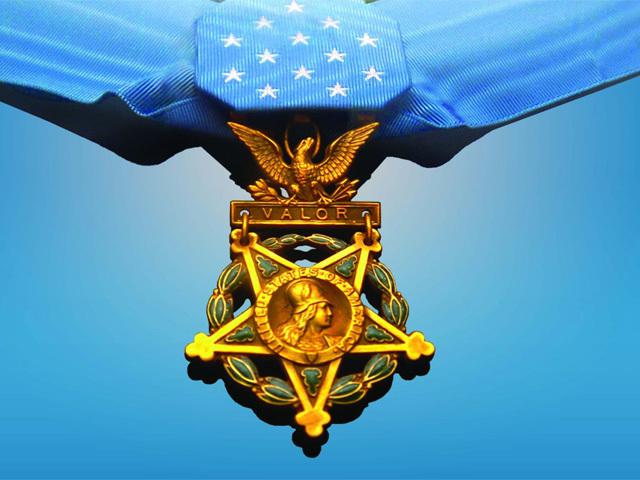
Medal of Honor (this medal was first awarded on 17 July 1945 as a Distinguished Service Cross) AWARDED FOR ACTIONS DURING World War II Service: Army
GENERAL ORDERS: CITATION: The President of the United States of America, in the name of Congress, takes pride in presenting the Medal of Honor (Posthumously) to Private First Class Joe M. Nishimoto (ASN: 35229917), United States Army, for conspicuous gallantry and intrepidity in action above and beyond the call of duty while serving with Company G, 2d Battalion, 442d Regimental Combat Team, attached to the 36th Infantry Division, in action against the enemy on 7 November 1944, near La Houssiere, France. After three days of unsuccessful attempts by his company to dislodge the enemy from a strongly defended ridge, Private First Class Nishimoto, as acting squad leader, boldly crawled forward through a heavily mined and booby-trapped area. Spotting a machine gun nest, he hurled a grenade and destroyed the emplacement. Then, circling to the rear of another machine gun position, he fired his submachine gun at point-blank range, killing one gunner and wounding another. Pursuing two enemy riflemen, Private First Class Nishimoto killed one, while the other hastily retreated. Continuing his determined assault, he drove another machine gun crew from its position. The enemy, with their key strong points taken, were forced to withdraw from this sector. Private First Class Nishimoto’s extraordinary heroism and devotion to duty are in keeping with the highest traditions of military service and reflect great credit on him, his unit, and the United States Army.
After the death of Joe M. Nishimoto, his brother Frank Nishimoto, sent back his younger brother’s personal belongings to a relative. Of the items in his pocket, there was a newspaper clipping that was sent to him from, Wilson Ishida. It was an article about another Marion, Ohio man, Lieutenant Keith Welch, also in the 442 RCT. First Lieutenant Keith Welch is listed as an officer of the 442 RCT. It is not known if they met and discussed their times in Marion, Ohio.
Joe’s Remains Return Home, Yet Family Continues to Suffer Even while Joe and Frank Nishimoto were serving in Europe, his parents and sister, Marie, were still forced to live in prison-like conditions in Arkansas. After the death of Joe Nishimoto, his parents would be sent to a ceremony at Camp Joseph T. Robinson, Arkansas, to receive the Silver Star on behalf of their late son. Joe Nishimoto was buried with military honors at Epinol American Cemetery, in France. His family requested that his body be returned to Fresno for burial. There was no family left in Fresno to receive his body, so his sister Marie left the Jerome Relocation Camp, and made the long train ride to California to receive her brother’s body. Joe M. Nishimoto was laid to rest at Washington Colony Cemetery in Fresno, Fresno County, California. It is sad to note that they would then have to return to Rohwer Relocation Camp, where they stayed until 26 July 1945.
Being Recognized PFC Joe M. Nishimoto was recognized posthumously for his heroic acts after the action that earned him the Silver Star. On 7 November 1944, near La Houssiere, France, Joe again distinguished himself by negotiating a heavily mined and booby-trapped area, then neutralizing 3 more machine gun positions. This action earned him the Distinguished Service Cross (DSC). The actions that earned PFC Nishimoto the DSC where later reviewed and it was determined that his actions were more than worthy of the Medal of Honor. On 21 June 2000, PFC Joe M. Nishimoto was awarded the Medal of Honor. His Sister, Akie Ishida, attended the ceremony and received the award, on behalf of Joe and his family. The award was presented by President William J. Clinton. In 2014, Joe’s Medal of Honor Award was donated to the National Museum of American History in Washington, D.C., where it is not part of the permanent collection of the Smithsonian. After being brought to the attention of the Ohio Veterans Hall of Fame, Joe M. Nishimoto would be nominated entry into this organization. At a ceremony at the National Veteran’s Memorial in Columbus, Ohio, Joe M. Nishimoto was entered into the Ohio Veterans Hall of Fame, Class of 2021.
Memorials: Joe M. Nishimoto is remembered in Marion, on the Honor Roll, at the Veterans Memorial Park, in Marion, Ohio; on the west wall of the Marion County Courthouse; and on the World War Two Memorial Wall, at the Marion Cemetery.
While D Company was on the border, with the 4th Infantry Regiment, there was little news about them. But the news was filled with war in Europe and the politics and rumors from the Border.
On 4 November 1916 the Marion Daily Star reported “A Fourth Ohio Boy Is Killed”
A FOURTH OHIO BOY IS KILLED
Private Earl Raymond Is Shot on Border.
BELONGS TO COMPANY FROM CHILLICOTHE
Message Received Says Killing is Accidental
Colonel B.L. Barger, Commander of the Fourth Regiment, Orders Thorough Investigation of Shooting Today
El Paso, Tex., Nov. 4. Colonel B.L. Bargar, commander of the Fourth Ohio infantry, today received a brief message from Captain S. House of H company, telling of the death of Private Earl Raymond, Chillicothe, who was stationed at Fabens, Texas, on border patrol. The message said Raymond was shot and instantly killed, adding that the shooting was accidental. It was impossible to reach Fabens by telephone today and Colonel Barger has been unable to learn the details. He has ordered a thorough investigation and will visit Fabens himself today. Raymond was the first Ohioan to lose his life on Texas soil.
The anti-election border raid predicted by Secretary of War Baker has not come off, nor are there any indications that there will be a raid. General George Bell, district commander, however, is taking no chance, and has the Fourth and Sixth Ohio infantry regiments and the Ohio cavalry squadrons vigilantly patrolling every ford and bridge leading out of Mexico. General Barger, who made several tours on his border post, reports that the Ohio boys are infatuated with their work.
Pvt. Earl Carson Raymond appears to have been shot by accident while hunting rabbits. So it seems that the soldiers were supplementing their rations by hunting the local game. Pvt. Raymond was born Dec 1896. He was later buried in Ross County, Ohio on 3 November 1916.
Another article reports of Villista cutting off the ears of captured Carranza soldiers.
On December 2, 1916 some front page articles: No Hope For Peace, Mexico Deplorable Financial Condition and Desertions from Carranza Army.
On December, 20, Villa Strengthens His Cause in Mexico, and an article in which it states that a letter to Ohio Governor Willis signed by 300 men of the Eighth Ohio was intercepted and returned to Colonal Vollruth. They were reporting their complaints of the conditions and poor health at Camp Pershing. There were reports of spinal meningitis in the Georgia regiments, and many other illnesses throughout camp.
On December 23, 1916, An article Ohio Boys to Stay on Border, in which Ohio Governor Willis writes a letter to Senator Warren G. Harding. He expresses his concerns and wants Senator Harding to petition Secretary of War Baker to return the Ohio troops as soon as possible. He also reports to him of the poor conditions in camp and of the health concerns.
On December 26, 1916, an article reads Kentuckians Kill Snipers.
On December 27, 1916, Poncho Villa Masses Forces, and a story about Pershing reporting that the Christmas storm had destroyed 75% of the tents in the camp of the Punitive Expedition. The storm had also blown down antennas, hampering communications.
Almost daily were reports of the war raging in Europe and of ships being attacked by u-boats. But nothing specific was reported about the Fourth or the boys of D Company. While the Ohio units were on the border a new Governor for Ohio was elected, James M. Cox, who was to take office January 8, 1917.




 Honoring Marion Ohio Veterans