July 1, 1916, The Marion Daily Star reports “Militia Troops At The Border” and “Fourth Is To Move Sunday”.,

Other front page articles are: “Families May Be Given Aid – Legislative Aid Sought For Dependents of Militiamen“, “British Launch Big Offensive“, “Mexicans Won’t Allow Advance“, and “Wilson Seeks To Avoid War“.

Screenshot (2)

The news was busy with information from the ongoing war in Europe, the constant changing events with Mexico and the mustering of guardsmen in all states as well as the news of D Company and the 4th Infantry of Ohio. As guardsmen from New England are the first guard units to arrive at the border with Mexico, Ohio’s 4th is about to receive orders to move together to Camp Willis. Camp Willis being newly constructed in today’s Upper Arlington. Colonel Byron Larkin Bargar is in command of the regiment, which is 1,495 strong. The 6th Regiment was ordered to Camp Willis along with 1st Field Hospital Corp, 2nd Ambulance Company, and A Company of the Signal Corps.

The afternoon or Part 2 of the Marion Daily Star had a photo on it’s front page of D Company of the Fourth Ohio National Guard. The headline says that D Company was to Leave Sunday (next day) to Camp Willis. There they would join up with other companies of the Fourth Ohio.

The Marion Daily Star contained an article: “Daily Routine Of Ohio Militiamen

Columbus, July 1, – As commander of Camp Willis, the mobilization camp here, Brigadier General William V. McMaken, of Toledo, has ordered the following daily routine to be observed by Ohio militiamen at the camp, pending their being mustered into the United States Army:
Reveille first call, 5:30 a.m.;
assembly, 5:45;
mess 6:15; sick call, 6:45;
fatigue, 6:50; drill, 7;
assembly, 7:10;
church call, Sunday, 1030;
recall from drill, 11:30;
adjutant’s call, 11:35;
first sergeant’s call, 11:40;
mess, 12; drill, 1P.M.;
assembly 6:15; tattoo 9;
call to quarters, 9:45;
taps, probably 10.
The soldiers go through exercises designed to limber up their joints immediately after responding to reveille.

The news continued with rumors of D company moving out. It seemed that the news wanted to report the move as soon as it was about to happen, but the Army had too many variables to take care of to give them the information.
In camp the company was busy about training the new recruits military drill and courtesy, weapons training, marksmanship, unit moments and daily camp life in an army unit. As this was a new camp, they were also being tasked out to help building of the camp itself.
On July 21, 1916 the War Department notified General W.V. McMaken that the remaining Ohio units at Camp Willis would be moved south to the border. Brigadier General John C. Speaks will review the Fourth, Fifth and Eighth Regiments; and Brigadier General W.V. McMaken will review the Second, Third and Sixth Regiments.
Poncho Villa and his Villista were still raiding and threats of the Mexican Federal Army, in defending their lands from the American invaders, were still front page news on many days.
The quartermasters were at this time trying to secure overcoats and other supplies for the soldiers in preparation for the move south. So men were drilled and inspected in preparations for the now impending border service.
On July 24th it was reported that Lightning had struck Camp Willis near its western section. This strike caused two privates from the Third Regiment to be injured from the shock of electric as they lay in their tents which were 100ft apart. One private, Elmer Lavalle of Bellefountain, Ohio was struck while his tent mates were untouched. He was carried, unconscious to the hospital. At the hospital he was cared for for over an hour before regaining consciousness. The second private, Victor Hamberger of Dayton, Ohio was stricken unconscious at the tent door. He was not discovered until an hour later when a tent mate stumbled over him in the darkness. Lightning also stuck the waste pipe next to Colonel Robert Hubler’s tent and knocked over several officers in that area. It also shocked a woman on the phone, but did not cause her to lose consciousness.
It was not until Friday, August 30th, that the Fourth actually moved out by train to the border. The regiment is commanded by Colonel Byron L. Bargar. The Fifth Regiment had moved out about 24 hours before. The Eighth Regiment is to move out the next day, Friday the cavalry squadron, 2nd Ambulance Company, and 2nd Hospital Corps.; Saturday the Artillery moves, And starting on Monday the First Brigade begins moment my train for the border. Only a battalion of engineers, two Field Hospitals and an ambulance company will remain and they are scheduled to leave September 8th.

CampWillis

Ohio National Guard Armory Marion, Ohio (Updated on March 14, 2019)

The location of the National Guard Armory that Company D reported to was the building that currently stands on 434 West Church St. at Olney Ave. It was probably most known by Marionites as the Cadet Hall, home of the Marion Cadets Drum & Bugle Corps. in the 1960s and 1970s.

IMG_3547
I did come across a photo of the building during the 1913 Flood. You can see “ONG” on the front of the building. I do not know when the Ohio National Guard stopped using the building. I do know that they later were headquartered at the Marion Depot, east of town. If you know anymore history on this building or have photos, please contact me and share.
The photo from the flood was shared by Mike of My Hometown Marion Ohio


ArmoryFlood
Armory During Flood of 1913


Armory1917
Post card with Post Mark 1917 on reverse.

Update March 14, 2019:

From The Marion Star dated March 2, 1968.

This article states the building was 55 years old in 1968. That would put it at being built around 1913, before the Flood of 1913. And it discusses the interest that the Marion Cadets Drum & Bugle Corps has in the building.

March2,1968

20 June 1916 Captain Geran Makes Appeal For More Men

From the Marion Daily Star

20 June 1916
Captain Geran Makes
Appeal For More Men

Says Company Will Leave
Wednesday or Thursday

Confident Men Will
Be Sent To The Border

Company Up to Noon Today Has
A Complement of Seventy.
Those Enlisting.

Captain George T. Geran and his Lieutenants are busy with their preparations for the members of D company to begin active service. They expect to go to the Mexican border at least.
Captain Geran states that the company now numbers seventy men, and he has no doubt that when the company leaves Marion tomorrow or Thursday it will be up to the full war strength, 141 men.
Captain Geran today made an appeal to the patriotism of Marionites to enlist. “We are getting men to enlist, but not as many as we should,” he said. “We ought to have our company recruited up to full war strength without trouble now. This is a time for all good men to respond to the colors.”
Captain Geran is confident that all Ohio National guardsmen will be sent to the Mexican border.
MORE MEN ENROLLED.
In addition to the new enlistments mentioned in the Star of yesterday, the following were enrolled during the day:
Parks L. Kennedy, Chester C. Holt, Charles A. Danner, Hugh H. Bishop, Vance Carpenter, James E. Russell, Eugene Elkins, Hal R. Johnson, Henry Plotner, Malcolm Essex, Paul A. Williams, Willard Hoskinson, Douglas Montagne, Edward Calvert and Frank Thomas.
The enlistments of the morning were Frank E. Dye, Otto C. McHenry, and Harley Viers.
Four others secured papers and took them home to secure the necessary signatures of parents or other relatives, they being under age.
NUMBER TURNED DOWN.
In the course of the enlistments a number have been turned down because of their having exceeded the age limit, and a number have been declined because of physical disqualifications.
Captain Geran states that he is determined to have only the pick of men and he is proceeding with the greatest care in the selection of new members for his company.
The attempted organization of volunteer companies or the suggested organization of them has handicapped the officers of D company in their work to a great extent, and the officers are something more than anxious that the good material which has been promised for prospective volunteer companies will come forward and join the organization which has its recognized footing in the service.

Star Article 6-20-1916


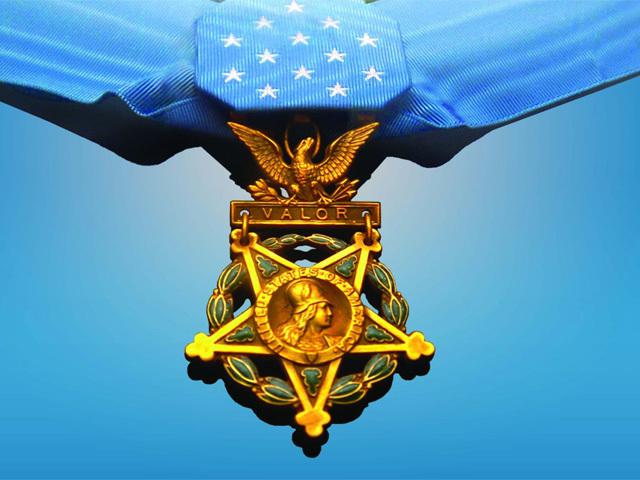
Medal of Honor Recipient Edward Clay Sharpless

Edward Clay Sharpless was born in Marion County, Ohio on 10 August 1853 (headstone is marked 20 August 1853). Edward’s home of record, at his time of enlistment, was Columbus, Ohio. Edward enlisted in the United States Army and served with the 6th U.S. Cavalry. He died 12 January 1934, and is buried in Mountainair Cemetery, Torrance County, New Mexico.

Medal-of-Honor-Main

Date of Issue: April 23, 1875
The President of the United States of America, in the name of Congress, takes pleasure in presenting the Medal of Honor to Corporal Edward Clay Sharpless, United States Army, for extraordinary heroism on September 9 – 11, 1874, while serving with Company H, 6th U.S. Cavalry, in action at Upper Washita River, Texas. While carrying dispatches Corporal Sharpless was attacked by 125 hostile Indians, whom he (and a comrade)* fought throughout the day.

*Corporal William Morris was one of only two Company H soldiers couriers on the September 1874 6th Cavalry Roster, and was probably Corporal Edward Sharpless’ unnamed comrade in this action. Corporal William Morris also received the Medal of Honor in this action.

Corporals Sharpless and Morris’s actions are mentioned in the following books:
Cheyennes of Dark Water Creek: The Last Fight of the Red River War by William Young Chulfant on pg. 114
Battles of the Red River War: Archeological Perspectives on the Indian Campaign of 1874 by J. Brett Cruse on pg. 162
Eyewitnesses to the Indian Wars: 1865-1890: Conquering the Southern Plains by Peter Cozzens
Buried Treasures: Famous and Unusual Grave Sites in New Mexico History By Richard Melzer pg. 286-287
Congressional Medal of Honor Society

Hall of Valor Project

Find A Grave

Ohio Veterans Hall of Fame

Edward Clay Sharpless’ name does not appear on any memorials in Marion, Ohio. His name and citation are located on the National Medal of Honor Memorial, White River State Park, Indianapolis, Indiana.

National Medal of Honor Memorial, White River State Park, Indianapolis, Indiana
Photo of Frosted Glass was Difficult

June 19, 1916 National Guard Called to Federal Service.

On June 19, 1916, the order, calling the National Guard into Federal service, went out to the governors of each state via telegram. The telegrams in part said, “Having in view the possibility of further aggression upon the territory of the United States from Mexico and necessity of the proper protection of the frontier, the president has thought proper to exercise the authority vested in him by the constitution and laws and call out the organized militia and the National guard necessary for that purpose.”

Secretary of War Newton D. Baker also asked congress to make the Hay-Chamberlain bill effective immediately. It was formerly to be effective in July. This bill would make all of the militia, now being mobilized, available for immediate service in Mexico.
The Governor of Ohio orders the Ohio National Guard to camp in Upper Arlington. Work still goes on to ready the camp for the guardsmen that are expected to begin arriving within the day and within the next four days the entire state militia should be in camp. Companies are expected to assemble at their local armories. Soldiers health is of upmost importance. They are to be examined and free of infection. No guardsman with any type infection will be permitted into the camp area. Prior to embarking for the Upper Arlington encampment, guardsmen are to stay under arms and sleep at the armories unless given special permission to sleep at nearby home.
Soldiers are ordered to assemble with the equipment that are prescribed for field duty. Commanding officers are limited to seventy-five cents a day for each enlisted man actually present for duty. Drill and instruction are to begin immediately and for at least five hours per day. All recruits must meet physical exam and standards of the regular army.

On June 20, 1916 General Funston asks for “considerable force” needed for patrol of the border from Nogales, Arizona to the Gulf of Mexico. He asks that state militias rush in their efforts to mobilize for service on the border.

Ohio Adjutant General Hugh, said that if a hurry-up order were received from the War Department, he would promptly comply as the condition of the Ohio National Guard was up to the task. He would only be constrained to the time train transport could carry the troops.

Governor Willis telegrammed Secretary of War Baker urging him to include the 1st Ohio Infantry in mobilization orders, as Colonel Proctor has done great work in readying the 1st for action. The War Office refused his request.

The rubber factories in Akron have announced they will pay full wages to employees throughout their enlistment for service in the Mexican Border Campaign. Bell Telephone said they will pay half-wages for any employees serving with at least one year’s employment with the company.

From Marion Daily Star 6-19-1916

TO MOBILIZE D COMPANY TO FULL WAR STRENGTH
Call for Militia To Assemble
Creates Excitement.

COMPANY MAY SEE
SERVICE IN MEXICO

Captain Geran Gets Order To
Remain Here Two Days and
Recruit More Men.

Coming from every direction excited crowds gathered at the armory this morning when the call was sent out at 9:40 o’clock for D company to report at the barracks in expectation of a call to the front because of the trouble in Mexico. Members of D company assembled at the armory shortly after the call was sounded.
Captain George T. Geran received orders this morning to assemble his company and to recruit to 144 men for federal service. The company will remain here two days before it leaves for the front. During the next two days enlistments will be received at the armory. As there are now but forty-five members of the company, the enlistments will have to be heavy for the next two days. Captain Geran is anxious that as many men as possible answer the call for recruits.
About the armory today all was a bustle as the members of the company made preparations to depart for the front. The new recruits will be given military instructions, and the whole company awaits the orders from the military headquarters at Columbus to depart.
Under the military law a company mobilized to a full war footing may be composed of from 108 to 130 men. However, the local company is to recruit only to 141.
ROSTER OF D COMPANY.
The roster of D company is as follows: Captain George T. Geran, Second Lieutenant L. W. Miller, Second Lieutenant George E. Crotinger, First Sergeant Alfred H. Moore, and William H. Millisor, Frank Thomas and Lloyd Swinehart, Sergeants, Frank L. Brown, Malcolm Essex, Clay Grounds, Irvin R. Isenbarger, Earl A. Lane and Curtis Markel, corporals: Homer Kennedy, cook: and the following privates: Vernon D. Hickman, Edwin P. Adams, Glen Adney, Claud N. Boxwell, Andrew Coffey, Arthur Craven, Arthur Culp, Glen O. Dellinger, Joseph Emptage, Raymond Gilmore, Albert Gosnell, Cloy D. Hartshon, Norris B. Head, Jacob R. Hickman, Glen O. Hoffhines, Owen M. Ingle, Charles L. Landon, William M Laughman, John Miller, Elmer Moore, Ernest R. Nece, Harry M. Plotner, Even Penry, Dale Smith, Walter A. Smith, Hubert Taylor, Oswald Thomas, Ray Thomas, Paul Wiland, John Wyley and Talmon P. Hockenberg.
The following enlisted this morning: Paul Wynn, Frank McCracken, T. W. Montague, Fred G. Senften, Douglas Montague, Floyd Snair, Harold Johnson, Alfred Millisor, Noah Breese, David Knickle and Paul Sackel

Star Article 6-19-1916 Enlistments